Buying a home sauna is less about finding the “best” option and more about choosing the right type of sauna for your space, lifestyle, and expectations. Many people feel overwhelmed early in the process because different sauna types are discussed as if they serve the same purpose.
They don’t.
This guide explains the main types of home saunas, how they differ, and what kinds of users each one tends to suit best.
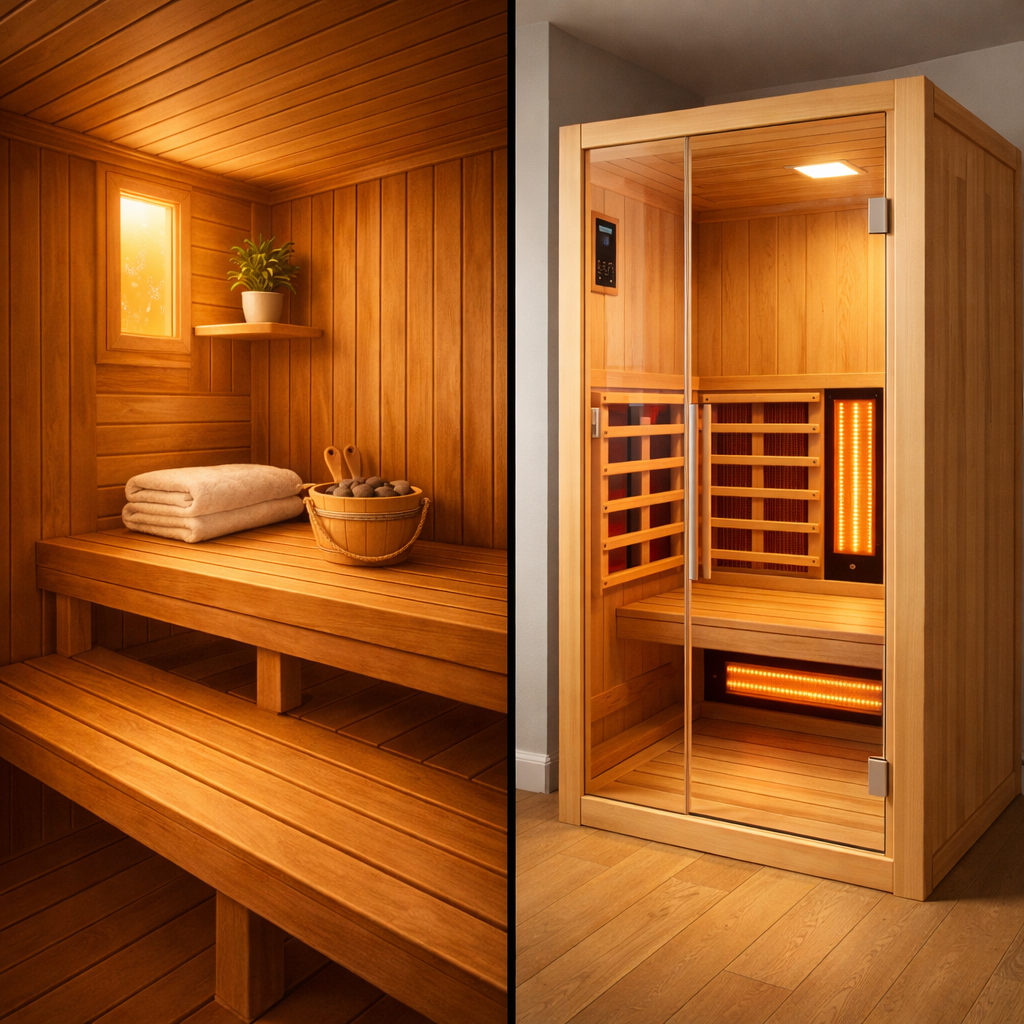
Why Sauna Type Matters Before You Buy
Home saunas vary widely in:
- How they produce heat
- How hot they feel
- How much space they require
- How they’re installed
Understanding these differences early helps prevent buying something that doesn’t fit your home or your routine.
Most buying mistakes happen before people understand how different sauna types actually work.
Traditional Saunas
Traditional saunas heat the air inside the room using a heater and hot stones. Water can be poured over the stones to create steam, which changes how the heat feels.
What Traditional Saunas Are Like
- Higher air temperatures
- Dry heat with optional steam
- Faster heat-up once fully warmed
- Strong, immersive heat sensation
Traditional saunas are closest to what most people imagine when they think of a sauna.
Temperature and humidity play a large role in how traditional saunas feel.
Who Traditional Saunas Are Best For
- People who enjoy intense heat
- Users familiar with sauna culture
- Those who like occasional steam
- Homes with adequate electrical capacity or ventilation
Traditional saunas tend to feel more demanding, especially during longer sessions.
Infrared Saunas
Infrared saunas heat the body more directly using infrared panels rather than heating the surrounding air as much.
What Infrared Saunas Are Like
- Lower air temperatures
- Gentle, penetrating warmth
- Longer session tolerance for some users
- No steam
Infrared saunas often feel more approachable for beginners.
Session length and comfort can differ between infrared and traditional saunas.
Who Infrared Saunas Are Best For
- People sensitive to high heat
- Those new to sauna use
- Smaller homes or apartments
- Users who prefer dry warmth
Infrared saunas trade intensity for accessibility.
Portable Saunas
Portable saunas are lightweight, collapsible setups that can be assembled and stored easily. They often use steam or infrared heat.
What Portable Saunas Are Like
- Lower cost
- Minimal space requirements
- Faster setup and breakdown
- Less heat retention
They’re often used as entry-level or temporary solutions.
Portable saunas make sauna use possible in limited spaces.
Who Portable Saunas Are Best For
- Renters
- People testing sauna use
- Those with limited space
- Occasional users
Comfort and durability vary widely by model.
Indoor vs Outdoor Saunas
Another ownership decision is where the sauna will live.
Indoor Saunas
- More convenient year-round
- Protected from weather
- Often smaller
Outdoor Saunas
- More space flexibility
- Strong sauna atmosphere
- Additional installation considerations
Placement affects cost, maintenance, and long-term use.
Single-Person vs Multi-Person Saunas
Capacity is another area where expectations matter.
- Single-person saunas save space
- Multi-person saunas allow flexibility
- Larger saunas heat differently
Buying larger than you need is often better than buying too small.
Common Ownership Mistakes
Some frequent missteps include:
- Choosing based on price alone
- Ignoring space and power requirements
- Expecting all sauna types to feel the same
- Overestimating how often multiple people will use it
Comfort and consistency matter more than specifications.
What Actually Matters Most
When choosing a home sauna type, focus on:
- How the heat feels to you
- How often you’ll realistically use it
- Where it fits in your home
- How much maintenance you want
The best sauna is the one you’ll actually use regularly.
Final Thoughts
Home saunas come in many forms, each with strengths and limitations. There is no universally “best” option — only better fits for different people and spaces.
Understanding sauna types before shopping makes future buying decisions simpler and more confident.
