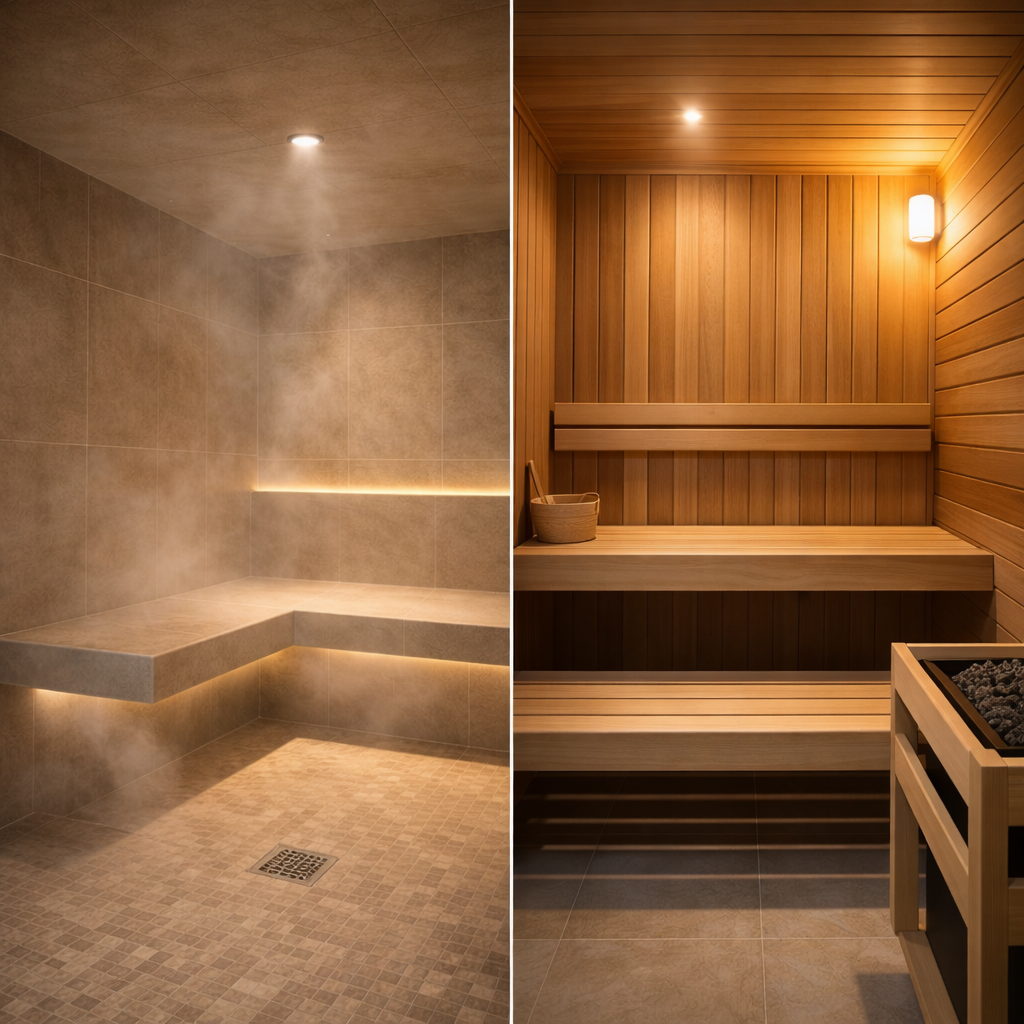
When people compare steam rooms and saunas, they’re usually not asking about abstract health benefits. They’re asking a practical question:
Which one actually makes more sense to install at home?
While saunas and steam rooms both provide heat-based relaxation, they differ significantly in how they’re built, how they’re used, and how they fit into a residential setting. This guide breaks down those differences from a homeowner’s perspective — cost, installation, maintenance, and long-term usability.
If you’re still deciding whether to build a steam room at all, start with the full overview.
The Core Difference (Quick Overview)
At a high level:
- Saunas heat the air (dry heat)
- Steam rooms heat water to produce steam (wet heat)
That single difference drives nearly every practical consideration that follows.
Installation Differences at Home
Steam Rooms
Steam rooms:
- Must be fully waterproofed (walls, ceiling, benches)
- Are usually built from tile, stone, or solid surface materials
- Require a steam generator, plumbing, and electrical work
- Often integrate into an existing bathroom or shower footprint
Because of this, steam rooms are commonly added during:
- Bathroom remodels
- Basement renovations
- New construction
Read our Steam Room Installation Guide: Planning & Requirements
Saunas
Saunas:
- Are typically prefabricated or modular
- Use wood interiors and don’t require waterproofing
- Only require electrical service (no plumbing)
- Can be installed in basements, garages, spare rooms, or outdoors
Saunas are generally easier to add after the fact, especially when remodeling isn’t planned.
Cost Comparison: Steam Room vs Sauna
Steam Room Costs
Steam room costs tend to cluster around:
- Steam generator
- Tile and waterproofing labor
- Electrical and plumbing work
A realistic range for a residential steam room is typically:
- $4,000–$10,000+, depending on size and finishes
Sauna Costs
Home sauna costs vary widely:
- Infrared saunas: lower entry cost
- Traditional saunas: higher upfront but fewer installation variables
Typical ranges:
- $2,000–$8,000, depending on type and size
Saunas usually cost less to install, especially if no construction is required.
Daily Use & Convenience
Steam Rooms
Steam rooms:
- Heat up quickly (often 5–10 minutes)
- Can be used as part of a daily shower routine
- Feel intensely hot despite lower temperatures due to humidity
Many homeowners choose steam specifically for convenience.
Saunas
Saunas:
- Take longer to heat (20–40 minutes)
- Encourage longer, more deliberate sessions
- Offer more flexibility in heat and humidity (especially traditional saunas)
Saunas often feel more like a dedicated ritual than a quick add-on.
Comfort & Sensation Differences
This is where personal preference dominates.
Steam rooms:
- High humidity
- Lower air temperature
- Feel heavier and more enveloping
- Can feel intense on breathing for some users
Saunas:
- Dry air
- Higher temperatures
- Easier breathing for many people
- Sweat evaporates more efficiently
If humidity feels overwhelming to you, a sauna will usually be more comfortable.
Maintenance & Cleaning
Steam Rooms
Steam rooms:
- Are easy to wipe down (tile and glass)
- Require regular ventilation to prevent moisture buildup
- Need occasional generator maintenance
Learn more: How to Clean a Steam Room
Saunas
Saunas:
- Require gentler cleaning to protect wood
- Need periodic sanding or wood care
- Are more sensitive to sweat buildup over time
Neither is “high maintenance,” but steam rooms are generally easier to clean day-to-day.
Long-Term Durability
Both can last a long time when properly built.
- Steam rooms depend heavily on waterproofing quality
- Saunas depend on wood quality and ventilation
Poor installation — not the heat itself — is the biggest cause of problems for either system.
Which One Makes More Sense for Most Homes?
A steam room often makes more sense if:
- You’re already remodeling a bathroom
- You want fast, daily use
- You prefer high humidity
- You want minimal wood maintenance
A sauna often makes more sense if:
- You want flexible placement
- You prefer dry heat
- You want simpler installation
- You like longer, ritual-style sessions
Some homeowners ultimately choose both — but most benefit from starting with the option that fits their space and habits best.
Final Thoughts
Steam rooms and saunas offer similar benefits, but they serve different lifestyles. The best choice isn’t about which is “better,” but which integrates more naturally into how you live and use your home.
If you’re deciding between them, review:
- Installation complexity
- Daily convenience
- Long-term maintenance
- Available space
The right answer is the one you’ll actually use consistently.
