Heatandsteam.com may receive commissions on purchases made from the links on this page.
Seating is one of the most overlooked parts of steam room design. Unlike saunas, where benches are often modular and replaceable, steam room seating is usually built in and permanent. The wrong choice can affect comfort, drainage, cleaning, and long-term durability.
This buyer’s guide explains which steam room seating options work best, what materials hold up over time, and which manufacturers offer reliable solutions.
If you’re still planning your overall layout, start with the full overview first.
How Steam Room Seating Differs From Sauna Benches
Steam room seating must handle:
- Constant moisture
- Condensation runoff
- Cleaning chemicals
- Long sit times in humid heat
Unlike sauna benches:
- Wood is rarely exposed
- Drainage and slope matter more
- Comfort comes from shape and height, not cushioning
Once installed, seating is difficult to change — making material and design decisions especially important.
Types of Steam Room Seating
Built-In Masonry Benches
Most common and durable option
These benches are:
- Framed with masonry or foam board
- Tiled or stone-clad
- Integrated into the room’s waterproofing system
Best for:
Permanent residential steam rooms and commercial installations.
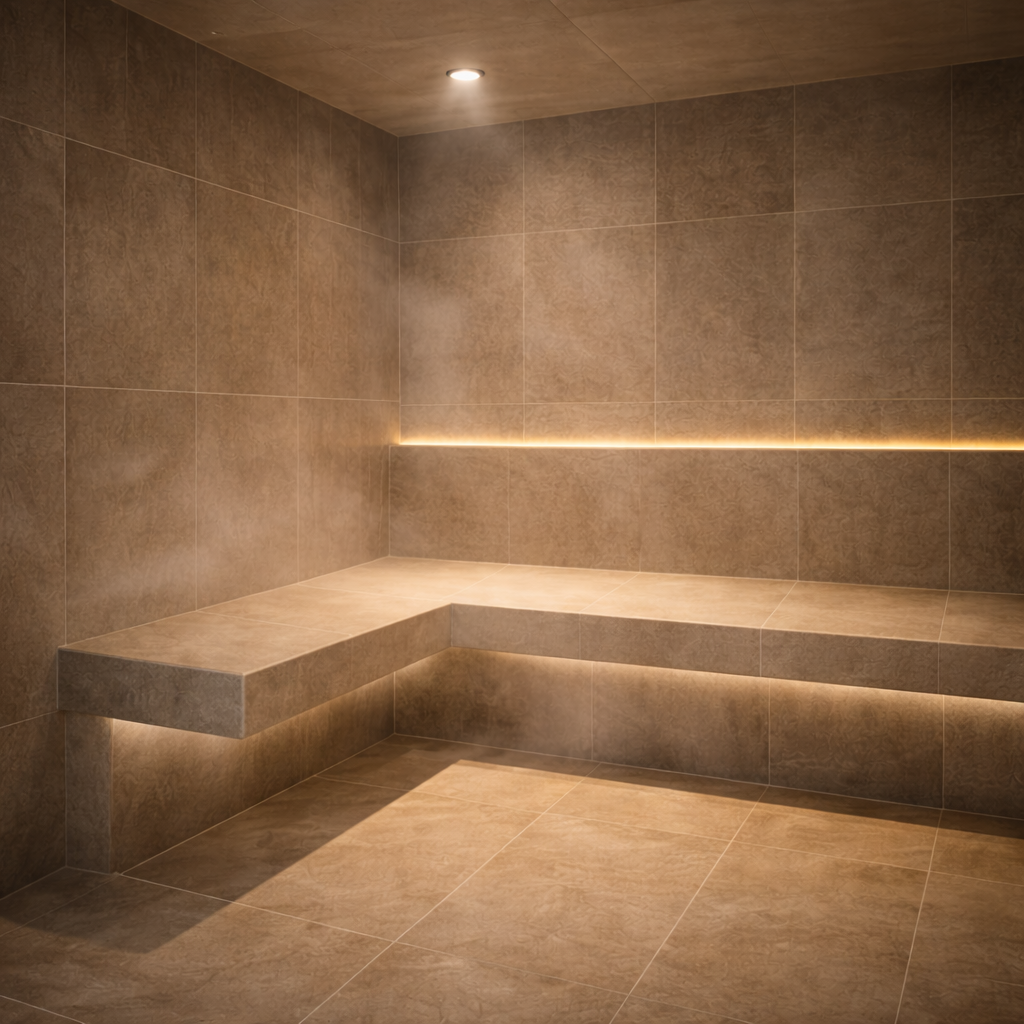
Floating or Cantilevered Benches
Best for drainage and cleaning
These benches:
- Appear to “float” off the wall
- Leave floor space open beneath
- Improve airflow and cleaning access
Best for:
Modern designs and smaller steam rooms where drainage matters.
Curved or Contoured Benches
Best for comfort
Curved benches:
- Support the back and legs better
- Reduce pressure points
- Feel more comfortable during longer sessions
Often paired with tile mosaics or stone finishes.
Fold-Down or Removable Seats
Limited use cases
Occasionally used in:
- Small steam showers
- Accessibility-focused designs
Generally less durable and less comfortable for long sessions.
Best Materials for Steam Room Benches
Porcelain Tile
Best overall choice
- Non-porous
- Durable
- Easy to clean
- Wide design options
Most residential steam rooms use porcelain tile benches.
Natural Stone (Granite, Slate, Quartzite)
- Visually striking
- Durable when sealed properly
- Can feel cooler to the touch
Requires more maintenance and proper sealing.
Solid Surface or Engineered Panels
Used in some prefabricated or modular systems. Easier installation, but fewer design options.
Recommended Steam Room Seating Systems & Components
Because seating is often site-built, recommendations focus on bench systems and components rather than standalone chairs.
Best Integrated Bench System
Wedi Fundo® Built-In Shower & Steam Room Benches
- Pre-sloped
- Waterproof foam core
- Designed for tile or stone finishes
- Simplifies installation and waterproofing
Best for:
Homeowners and contractors who want predictable results and long-term durability.
Best Modular Bench System
Schluter® KERDI-BOARD-SB Bench
- Lightweight but strong
- Fully waterproof
- Compatible with Schluter waterproofing systems
- Can be tiled to match walls
Best for:
Steam rooms already using Schluter waterproofing products.
Best for Custom Designs
Custom Masonry Bench (Contractor-Built)
- Fully customizable height and depth
- Can be contoured or curved
- Works with any tile or stone finish
Best for:
High-end steam rooms where comfort and aesthetics are priorities.
This option depends heavily on installer experience.
What to Look for When Buying or Designing Steam Room Seating
Proper slope and drainage
Bench surfaces should slope slightly forward to prevent water pooling.
Comfortable height and depth
Common dimensions:
- Seat height: ~17–19 inches
- Depth: 16–20 inches
Comfort matters more in steam rooms because sessions are often longer.
Waterproof integration
Benches must be fully integrated into the room’s waterproofing system.
This is not an area to cut corners.
Cleaning access
Floating benches are easier to clean underneath and reduce moisture traps.
Common Steam Room Seating Mistakes
- Benches that are too shallow
- Flat surfaces that hold water
- Using untreated wood
- Poor waterproofing integration
Many seating problems show up later as odors or mold issues.
[INTERNAL LINK: link the words “odor or mold issues” to Common Steam Room Problems]
How Seating Choices Affect Cost
Bench design affects:
- Labor cost
- Tile complexity
- Installation time
Seating decisions should be made early in the design process.
Is Upgrading Seating Worth It?
For most steam room owners, yes.
Comfortable seating:
- Encourages longer, more relaxed sessions
- Improves perceived quality of the space
- Has little impact on operating cost
Seating is one of the upgrades people notice most.
Final Thoughts
Steam room seating should prioritize durability, comfort, and drainage. Built-in tiled benches remain the gold standard, but modern modular systems can simplify installation and improve consistency.
If you’re choosing between upgrades, also review:
