Heatandsteam.com may receive commissions on purchases made from the links on this page.
Steam room flooring does more than support foot traffic. It manages constant moisture, condensation runoff, and daily cleaning, all while remaining safe under bare feet.
The wrong flooring choice can lead to standing water, slippery surfaces, grout failure, odors, and long-term waterproofing damage. This buyer’s guide explains which steam room flooring materials actually work, which ones cause problems, and how to choose a system that lasts.
If you’re still planning the full build, start with the big picture first.
Why Steam Room Flooring Is Different
Steam room floors must handle:
- Continuous condensation
- High humidity
- Frequent cleaning
- Barefoot traction
Unlike standard bathroom floors:
- Drainage is more critical
- Slip resistance matters more
- Waterproofing integration is non-negotiable
Flooring decisions affect comfort, safety, and maintenance for the life of the steam room.
Best Flooring Materials for Steam Rooms
Porcelain Mosaic Tile
Best overall choice
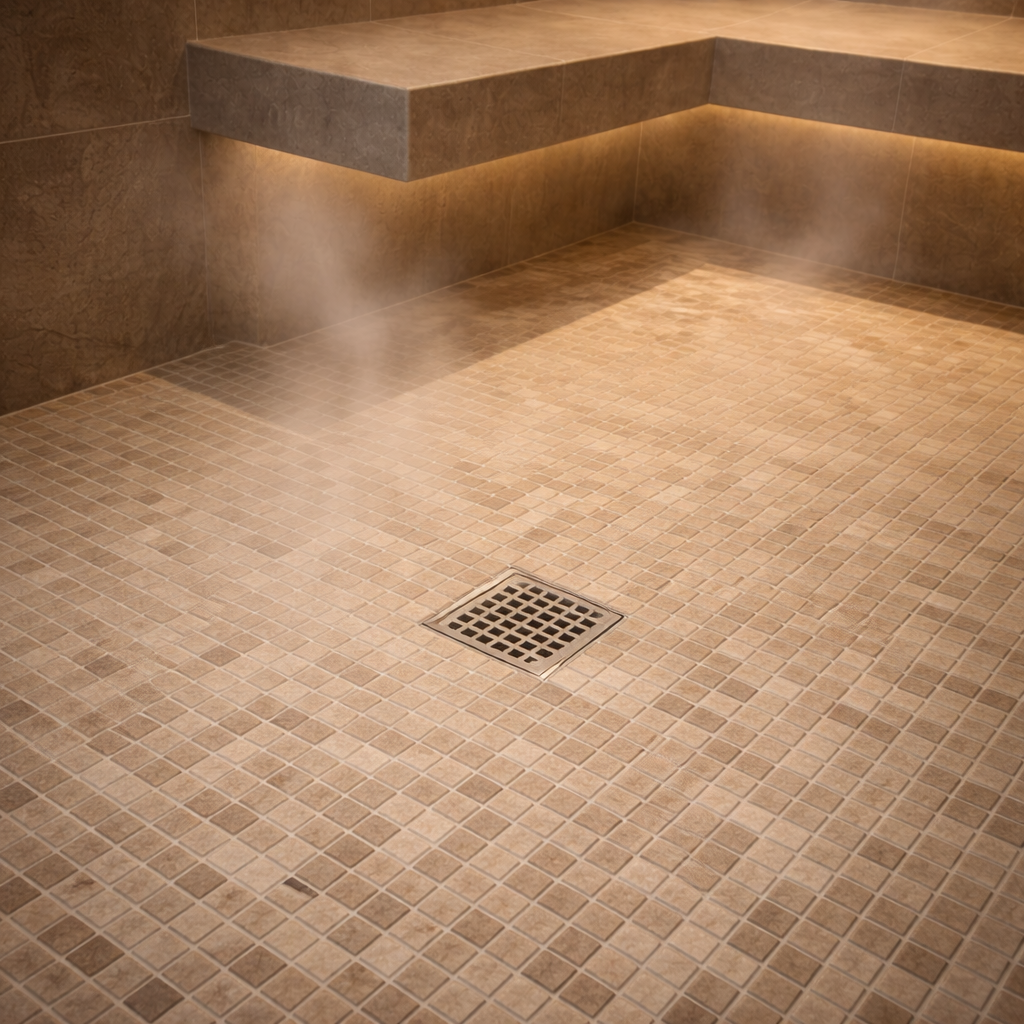
Porcelain mosaic tile is the most commonly recommended steam room flooring material.
Why it works
- Non-porous
- Durable
- Excellent traction in small formats
- Handles slopes and drains well
Best for:
Nearly all residential steam rooms.
Smaller tile sizes (1″–2″) conform better to sloped floors and improve slip resistance.
Natural Stone Mosaic Tile
Best for aesthetics (with trade-offs)
Stone options include:
- Slate
- Marble
- Granite
- Pebble stone mosaics
Pros
- Natural texture
- High-end appearance
- Good traction (especially pebble tile)
Cons
- Requires sealing
- Higher maintenance
- Can stain or discolor over time
Best for:
Design-driven steam rooms with a willingness to maintain.
Pebble Tile Floors
Best for traction and drainage
Pebble floors:
- Provide excellent grip
- Allow water to flow naturally between stones
- Hide minor discoloration well
Trade-offs
- More grout to clean
- Can feel uneven to some users
Often used in steam showers as well.
Flooring Materials to Avoid
Large-Format Tile
- Poor traction
- Difficult to slope correctly
- Increases slip risk
Polished Stone
- Extremely slippery when wet
- Unsafe for steam environments
Vinyl, Laminate, or Wood
- Not designed for continuous heat and humidity
- Can trap moisture
- High failure risk
Drainage and Floor Slope (Critical)
Proper steam room flooring depends on slope, not just material.
Recommended slope
- ¼ inch per foot toward the drain
- No flat areas where water can pool
Drain options include:
- Center drains
- Linear drains (must be steam-rated)
Drainage errors are one of the most common causes of steam room odor problems.
Recommended Steam Room Flooring Systems & Components
Because flooring performance depends on the entire system, not just tile, these recommendations focus on floor assemblies, not loose materials.
Best Overall Flooring System
Schluter® KERDI-LINE / KERDI-DRAIN Steam Shower System
- Fully waterproof
- Pre-sloped options available
- Compatible with porcelain and stone tile
- Designed for steam showers and steam rooms
Best for:
Homeowners and contractors who want predictable drainage and long-term reliability.
Best Pre-Sloped Floor Base
Wedi Fundo® Primo or Ligno Shower Base
- Factory-sloped
- Waterproof foam core
- Simplifies installation
- Tile-ready surface
Best for:
Residential steam rooms where installation consistency matters.
Best Custom Floor Option
Custom Mortar Bed with Waterproof Membrane
- Fully customizable slope
- Works with any tile material
- Requires experienced installation
Best for:
High-end or irregular steam room layouts.
Slip Resistance and Safety
Look for:
- Textured tile surfaces
- Smaller tile formats
- Matte finishes
Slip resistance matters more in steam rooms than in standard showers.
Cleaning and Maintenance Considerations
Floor choice affects:
- Grout cleaning frequency
- Mold resistance
- Ease of rinsing
Mosaic tiles are easier to keep clean when properly sealed and maintained.
How Flooring Choices Affect Cost
Flooring impacts:
- Labor time
- Tile material cost
- Waterproofing complexity
Complex patterns and stone materials increase cost more than tile size alone.
Is Upgrading Steam Room Flooring Worth It?
Yes.
Flooring affects:
- Safety
- Daily comfort
- Long-term durability
- Maintenance effort
It’s one of the few steam room components that users notice immediately and every day.
Final Thoughts
The best steam room floors prioritize drainage, traction, and waterproofing, not just appearance. Porcelain mosaic tile paired with a proven waterproofing system remains the most reliable choice for most homes.
If you’re choosing between upgrades, also review:
- [INTERNAL LINK: link “Steam Room Seating & Benches Buyer’s Guide”]
- [INTERNAL LINK: link “Steam Room Installation Guide”]
