Heatandsteam.com may receive commissions on purchases made from the links on this page.
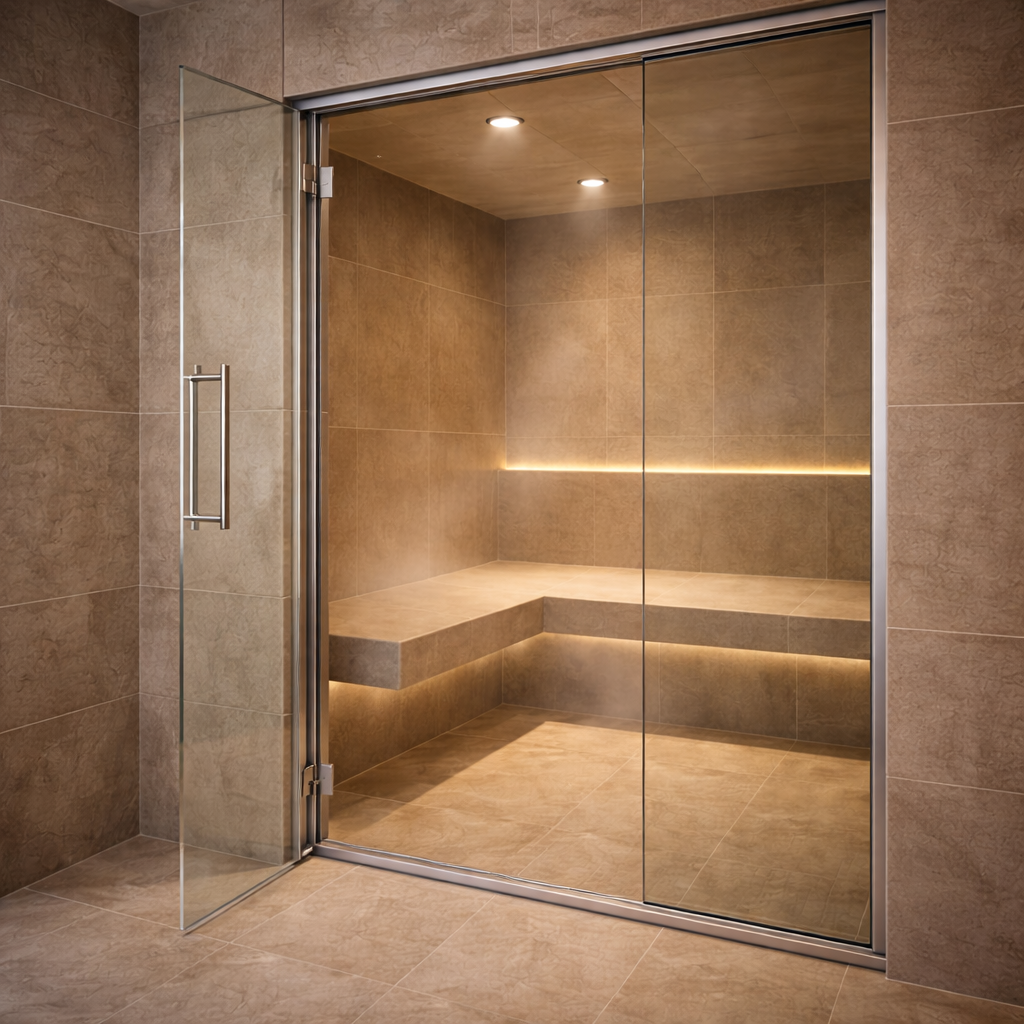
When people search for “steam room doors,” they’re usually not looking for a specialty product made only for steam rooms. In reality, most residential steam rooms use high-quality glass shower doors that are properly sized, sealed, and installed for steam environments.
Many niche sauna retailers market “steam room doors,” but in most cases these are standard glass shower doors sold at a premium under different branding. For homeowners, the best options are typically frameless, framed, pivot, or sliding glass shower doors available from mainstream retailers like Amazon, Home Depot, Build.com, and Wayfair.
This guide explains which types of glass doors work best for steam rooms, how to choose between them, and which features matter most for long-term comfort and performance.
Do Steam Rooms Need Special Doors?
Steam rooms do not require a proprietary or branded “steam room door.” What they do require is:
- Tempered safety glass
- Proper door thickness and hardware
- Good sealing at the bottom and edges
- Professional installation and alignment
As long as those criteria are met, many shower doors perform perfectly well in steam environments.
If you’re still planning your enclosure, door selection should be coordinated with layout, materials, and waterproofing.
Frameless Glass Doors (Most Popular Choice)
Frameless glass doors are the most common and visually appealing option for home steam rooms.
Why frameless doors work well in steam rooms
- Create a clean, open appearance
- Showcase tile and stone finishes
- Use thicker glass (often 3/8″) for rigidity
- Fewer metal components exposed to moisture
Most frameless doors rely on heavy-duty hinges or sliding hardware rather than a full perimeter frame.
Frameless sliding doors
Frameless sliding doors are ideal when space is limited.
Best for:
- Narrow bathrooms
- Steam rooms near hallways or vanities
- Situations where door swing clearance is tight
What to look for:
- Tempered glass (minimum 1/4″, ideally 3/8″)
- Stainless steel or corrosion-resistant hardware
- Bottom sweep or water-retention strip
Example products to research and link:
- KPUY Frameless Sliding Shower Door (55–60″ range)
- Woodbridge Frameless Sliding Shower Door with soft-close hardware
Check price at Amazon or Home Depot
Frameless hinged (swing) doors
Hinged frameless doors provide a wide, walk-in feel and are common in higher-end steam rooms.
Best for:
- Larger steam enclosures
- Walk-in designs
- Luxury or spa-style builds
What to look for:
- 3/8″ tempered glass
- Solid wall backing for hinges
- Adjustable hinges for out-of-plumb walls
Example products:
- DreamLine Unidoor Plus Frameless Hinged Shower Door
- VIGO Frameless Hinged or Pivot Door Series
Available from Amazon, Home Depot, Build.com, and Wayfair
Framed and Semi-Framed Glass Doors
Framed or semi-framed doors use metal framing along some or all edges of the glass.
When framed doors make sense
- Older homes with uneven walls
- Budget-conscious builds
- Installations where maximum rigidity is needed
Pros:
- Easier alignment during installation
- Often lower cost
- Good sealing when properly installed
Cons:
- More visible metal
- Slightly less modern appearance
Example products to research and link:
- GETPRO Semi-Frameless Bypass Shower Door
- Similar framed sliding doors sold by Delta, OVE, or Aston
Available from Amazon, Home Depot, Build.com, and Wayfair
Pivot Doors (Excellent for Steam Rooms)
Pivot doors rotate on a hinge at the top and bottom rather than side hinges.
Why pivot doors are popular in steam rooms
- Wide opening for easy entry
- Fewer side hinges under stress
- Clean appearance with minimal framing
Pivot doors are often available from retailers like Build.com and Home Depot, making them easy to source and return if sizing needs adjustment.
Example products:
- 44–48″ Pivot Semi-Frameless Shower Door
- VIGO or DreamLine pivot door models
View options at Amazon, Home Depot, and Wayfair
Glass Types: Clear vs Textured
Clear glass
- Maximizes light
- Makes small steam rooms feel larger
- Shows tile and stone detail
Textured or patterned glass
- Adds privacy
- Reduces visibility of water spots
- Slightly diffuses light
Example textured glass doors:
Glass choice is aesthetic — both work equally well in steam environments.
Hardware, Seals, and Accessories (Often Overlooked)
The door itself matters, but accessories are critical for steam containment.
Hardware kits
Look for:
- Stainless steel components
- Corrosion-resistant finishes
- Proper glass thickness compatibility
Example accessory:
Bottom seals and sweeps
Water-retention strips help:
- Keep steam inside
- Prevent leaks onto bathroom floors
- Improve long-term comfort
Example accessory:
These accessories are inexpensive and often make the biggest functional difference.
Installation Considerations for Steam Rooms
Steam room doors demand precise installation.
Important reminders:
- Walls must be plumb and reinforced
- Glass alignment affects sealing
- Improper installs lead to leaks and cold spots
Professional installation is strongly recommended.
How to Choose the Right Steam Room Door
Ask yourself:
- Do I have space for a swinging door, or do I need sliding?
- Is my wall structure suitable for frameless hinges?
- Do I prefer modern minimalism or extra rigidity?
- Am I prioritizing aesthetics, budget, or ease of install?
Most homeowners end up choosing frameless sliding or pivot doors for the best balance of appearance and performance.
Final Thoughts
There’s no need to chase specialty “steam room doors.” High-quality glass shower doors — properly sized, sealed, and installed — perform exceptionally well in steam rooms and are easier to source, replace, and maintain.
By focusing on glass thickness, hardware quality, sealing, and installation, you’ll get better results than relying on niche branding.
If you’re still designing your enclosure, door selection should always follow layout and waterproofing decisions.
