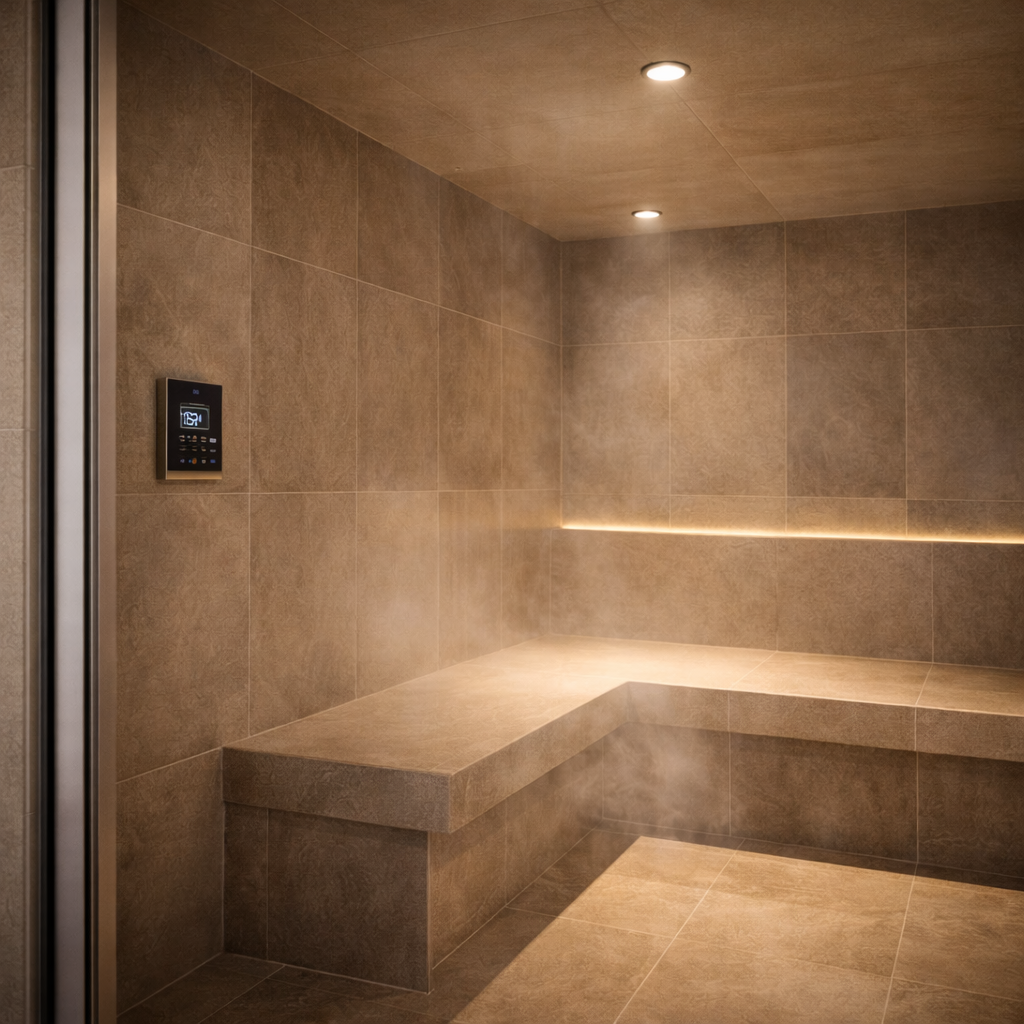
A steam room control panel is the primary interface between you and your steam system. It allows you to start and stop steam sessions, set time and temperature limits, and—depending on the model—control features like lighting, aromatherapy, or audio.
Control panels are simple devices in appearance, but they are deeply tied to the steam generator itself. Choosing the wrong control panel is one of the most common (and costly) steam room mistakes.
This guide explains how steam room controls work, why most are brand-specific, and how to choose the right one for your system.
If you’re still early in the process, it helps to understand the full system first.
What a Steam Room Control Panel Does
At a minimum, a control panel allows you to:
- Turn the steam generator on and off
- Set session duration
- Control steam output or temperature limits
More advanced control panels may also manage:
- Automatic start/stop scheduling
- Lighting or chromotherapy
- Aromatherapy delivery
- Audio systems
- Wi-Fi or app-based controls
Not every user needs advanced features. Reliability and compatibility matter far more than complexity.
Are There Universal Steam Room Control Panels?
In practice, no—there are no widely supported, truly universal steam room control panels that work across all steam generator brands.
Most steam room controls are designed to work only with specific manufacturers’ generator systems. This is not arbitrary. It’s driven by safety, communication protocols, and system design.
Why Steam Room Controls Are Usually Brand-Specific
Proprietary communication and wiring
Steam generators and control panels often use proprietary wiring harnesses, connectors, and communication protocols. A control panel from one brand typically cannot communicate correctly with a generator from another brand—even if voltage appears similar.
Safety and warranty requirements
Modern steam generators rely on control panels for:
- Temperature limits
- Automatic shutoffs
- Fault detection
Using a non-approved control panel can disable safety interlocks, void warranties, or fail inspection.
Sensor compatibility
Temperature sensors, steam heads, and secondary controls are often integrated into the control logic. A mismatched panel can produce inaccurate readings or unsafe operation.
For these reasons, control panels should be selected as part of the generator system—not as standalone accessories.
More Flexible or “Near-Universal” Control Options (With Limitations)
You may encounter control panels marketed as generic or universal. These can work in very limited scenarios, but they come with tradeoffs.
Basic on/off or timer panels
Simple panels that only start or stop steam—without temperature control or presets—can sometimes be paired with different generators if voltage and signal requirements match.
However:
- Advanced features usually won’t work
- Safety integration may be limited
- Manufacturer support is minimal
Third-party or budget controllers
Low-cost controllers sold through marketplaces may function at a basic level but typically:
- Require custom wiring
- Lack certification
- Offer no long-term reliability assurances
These options are best viewed as budget compromises, not full replacements.
Typical and Recommended Control Panel Setup
Match the control panel to your generator brand and model
This is the recommended approach for almost all residential steam rooms.
Most manufacturers design control panels specifically for their generator lines, ensuring:
- Full feature support
- Safety compliance
- Warranty protection
This decision usually happens at the same time as generator selection.
Common Control Panel Types
Basic digital controls
- Time and temperature adjustment
- Simple display
- Durable and reliable
Best for users who want straightforward operation.
Touchscreen or premium controls
- Larger displays
- Presets and scheduling
- Integrated accessory control
These are popular in higher-end residential builds.
Smart or Wi-Fi controls
- App-based control
- Remote start or scheduling
- Integration with other home systems
Convenient, but not essential for most users.
Where Control Panels Are Installed
Control panels are typically mounted:
- Inside the steam room (rated for wet heat)
- Or just outside the enclosure
Placement affects usability and longevity. Panels must be:
- Properly sealed
- Installed at manufacturer-approved height
- Protected from direct steam discharge
Placement is part of installation planning.
[INTERNAL LINK: link the words “installation planning” to Steam Room Installation Guide]
Common Control Panel Mistakes
- Buying a panel before choosing a generator
- Mixing brands between generator and controls
- Paying for features you won’t use
- Installing panels too close to steam heads
Many performance complaints trace back to control incompatibility.
How Control Panels Affect Long-Term Ownership
A good control panel:
- Makes sessions effortless
- Encourages regular use
- Reduces frustration and service calls
A poorly chosen panel:
- Creates reliability issues
- Limits upgrade options
- Can shorten generator lifespan
Controls are a small component with an outsized impact on daily experience.
Final Thoughts
Steam room control panels are not universal accessories—they are system components. The safest and most reliable approach is to choose a control panel designed specifically for your steam generator’s brand and model.
Simple controls work well for most users. Advanced features are optional, not required.
If you’re still deciding, return to:
