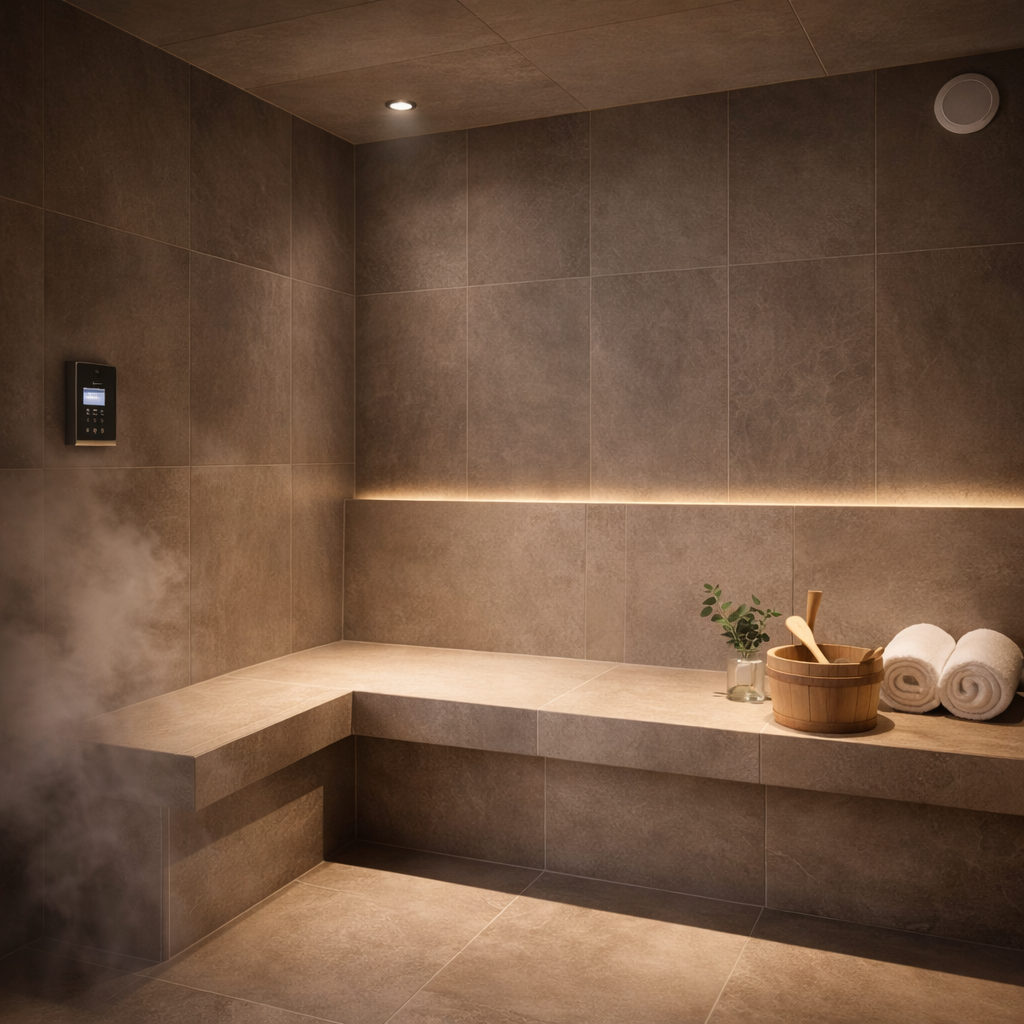
A steam room does not require many accessories to function properly. At its core, a steam room is simply a sealed, waterproof space paired with a steam generator. That said, a small number of well-chosen accessories can significantly improve comfort, usability, and long-term satisfaction.
This guide focuses on steam room accessories that people actually buy, use, and keep — not novelty add-ons or gimmicks. We’ll separate essentials from optional upgrades so you can decide what’s worth adding to your setup.
If you’re still planning your build, it helps to understand the system first.
Heatandsteam.com may receive commissions on purchases made from the links on this page.
Control Panels and Steam Room Controls
The control panel is the primary interface between you and your steam room. It allows you to start and stop steam sessions, set time and temperature limits, and—depending on the model—control features like lighting, aromatherapy, or audio.
One of the most common questions buyers ask is whether there are universal steam room control panels that work with any steam generator. In practice, the answer is no.
Are There Universal Steam Room Control Panels?
You generally cannot buy a truly universal steam room control panel that will plug into any steam generator brand and work out of the box.
Most steam room controls are designed to work only with a specific manufacturer’s generator system, because they communicate using proprietary wiring, sensors, and safety logic that must match the generator exactly.
This is not marketing lock-in—it’s a function of safety and system design.
Why Steam Room Controls Are Usually Brand-Specific
Proprietary communication and wiring
Steam generators and their control panels often use custom wiring harnesses, connectors, and communication protocols. A control panel from one brand typically cannot “talk” to a generator from another brand, even if voltage appears similar.
Safety and warranty requirements
Steam generators include built-in safety interlocks for temperature limits, automatic shutoffs, and fault detection. Using a non-approved or mismatched control panel can disable these systems, void warranties, or create code-compliance issues.
Sensor compatibility
Temperature sensors, steam heads, and secondary controls are often integrated into the control logic. A mismatched panel may read incorrect temperatures or fail to regulate steam output properly.
Because of these factors, manufacturers design their control panels as part of a closed system.
More Flexible or “Near-Universal” Options (With Caveats)
You may encounter products marketed as generic or universal steam room controls. These can work in very limited scenarios, but they are not true plug-and-play solutions.
Generic or third-party controllers
Some low-cost controllers sold through marketplaces like eBay or Walmart are advertised as steam generator control panels. These may work for basic on/off control if wired manually, but compatibility is not guaranteed, and advanced features are often unsupported.
They also typically lack manufacturer certification or long-term reliability data.
Basic timer or on/off panels
Simple panels that only start or stop steam—without temperature regulation, presets, or accessory control—can sometimes be paired with multiple generators if voltage and signal requirements match.
However, features like temperature control, smart scheduling, lighting, or aromatherapy usually will not function.
These options are best viewed as budget or retrofit compromises, not full replacements.
Typical and Recommended Setup
Match the control panel to your generator brand and model
This is the safest and most reliable approach. Most manufacturers sell control panels engineered specifically for their generator lines.
Examples include:
- SteamSpa control panels designed for SteamSpa generators
- Mr. Steam controls paired with Mr. Steam residential units
- Amerec digital control kits for Amerec AK-series generators
- Kohler Invigoration control kits for Kohler steam systems
- Steamist digital control packages for Steamist generators
This ensures proper communication, safety compliance, and full feature support.
Control compatibility is determined during generator selection.
What to Check Before Buying a Steam Room Control Panel
Before purchasing any control panel—especially if replacing or upgrading—verify the following:
- Generator model and power rating (kW, voltage, phase)
- Wiring type and connectors (plug style, terminal layout)
- Sensor compatibility (temperature probes, steam head sensors)
- Safety certifications (UL / CE compliance)
- Features needed (basic on/off vs temperature control vs smart features)
If any of these do not match, the panel may not function correctly—or at all.
Bottom Line
There are no widely supported, truly universal steam room control panels that work seamlessly across all steam generator brands.
For full functionality, safety, and long-term reliability, you should plan on using a control panel designed specifically for your steam generator’s brand and model. Generic or third-party panels may work for basic control, but they involve trade-offs and risk.
If you’re still planning your system, choosing the generator first simplifies everything downstream.
Seating and Comfort Accessories
Steam rooms are typically tiled and firm by design. Comfort accessories make longer sessions more pleasant without compromising durability.
Steam room seat cushions
Look for cushions that are:
- Heat-resistant
- Non-absorbent
- Designed specifically for wet environments
Practical option:
Avoid foam or fabric products not designed for steam — they trap moisture and degrade quickly.
Aromatherapy Systems (One of the Most Popular Upgrades)
Aromatherapy is one of the most commonly purchased steam room accessories because it’s affordable, noticeable, and easy to add.
How steam room aromatherapy works
- Essential oils are introduced into the steam line
- The scent is distributed evenly throughout the room
- No direct contact with tile or surfaces
This is very different from simply placing oils in the room (which can damage materials).
Common choices:
- Eucalyptus
- Lavender
- Peppermint
Reliable option:
Always use oils specifically labeled for steam room use.
Lighting and Chromotherapy
Lighting affects mood more than most people expect. While not essential, it’s a popular upgrade for users who want a more spa-like experience.
Chromotherapy lighting
Chromotherapy systems:
- Use LED lighting
- Allow color changes
- Are sealed for wet environments
The goal is ambiance, not therapy claims.
Typical upgrade:
If you already have adequate lighting, this is optional — but many owners enjoy it once installed.
Audio and Entertainment Accessories
Audio is less common than lighting or aromatherapy, but some users enjoy music or ambient sound during longer sessions.
What to look for
- Waterproof rating
- External amplifier or Bluetooth connection
- Controls located outside the steam room
Safer option:
Hard-wired systems are best installed during construction. Portable speakers are more flexible for retrofits.
Steam Room Cleaning and Maintenance Accessories
These are not glamorous, but they are among the most frequently purchased steam room accessories.
Useful maintenance tools
- Microfiber cloths for wipe-downs
- Non-abrasive scrub brushes
- Grout brushes for tile lines
Frequently purchased items:
Regular cleaning prevents long-term issues.
For a full routine, see: How to Clean a Steam Room
Accessories Most People Can Skip
Not every accessory adds value. Common items that are often unnecessary include:
- Decorative accessories not rated for steam
- Furniture not designed for wet heat
- “Health” devices without moisture protection
Steam rooms are harsh environments. Accessories must be purpose-built or they won’t last.
How Accessories Affect Long-Term Ownership
Well-chosen accessories:
- Improve comfort
- Increase usage consistency
- Reduce maintenance frustration
Poorly chosen accessories:
- Fail prematurely
- Trap moisture
- Create cleaning headaches
Thoughtful upgrades support long-term satisfaction.
Final Thoughts
Steam room accessories are best added intentionally. You don’t need many — but the right few can dramatically improve comfort and enjoyment.
If you’re building or upgrading:
- Prioritize control panels and aromatherapy
- Add lighting if ambiance matters to you
- Choose maintenance tools that make cleaning easy
For broader planning, revisit: the Steam Room Buying Guide
