Red and near-infrared light therapy is often mentioned alongside chromotherapy in modern saunas, but the two are not the same thing. While chromotherapy generally refers to colored lighting used for ambiance, red and near-infrared light therapy focuses on specific wavelengths of light that have been studied for their potential biological effects.
This article explains what red and near-infrared light therapy is, how it differs from general chromotherapy, what benefits are supported by evidence, and how it’s typically used in or alongside saunas.
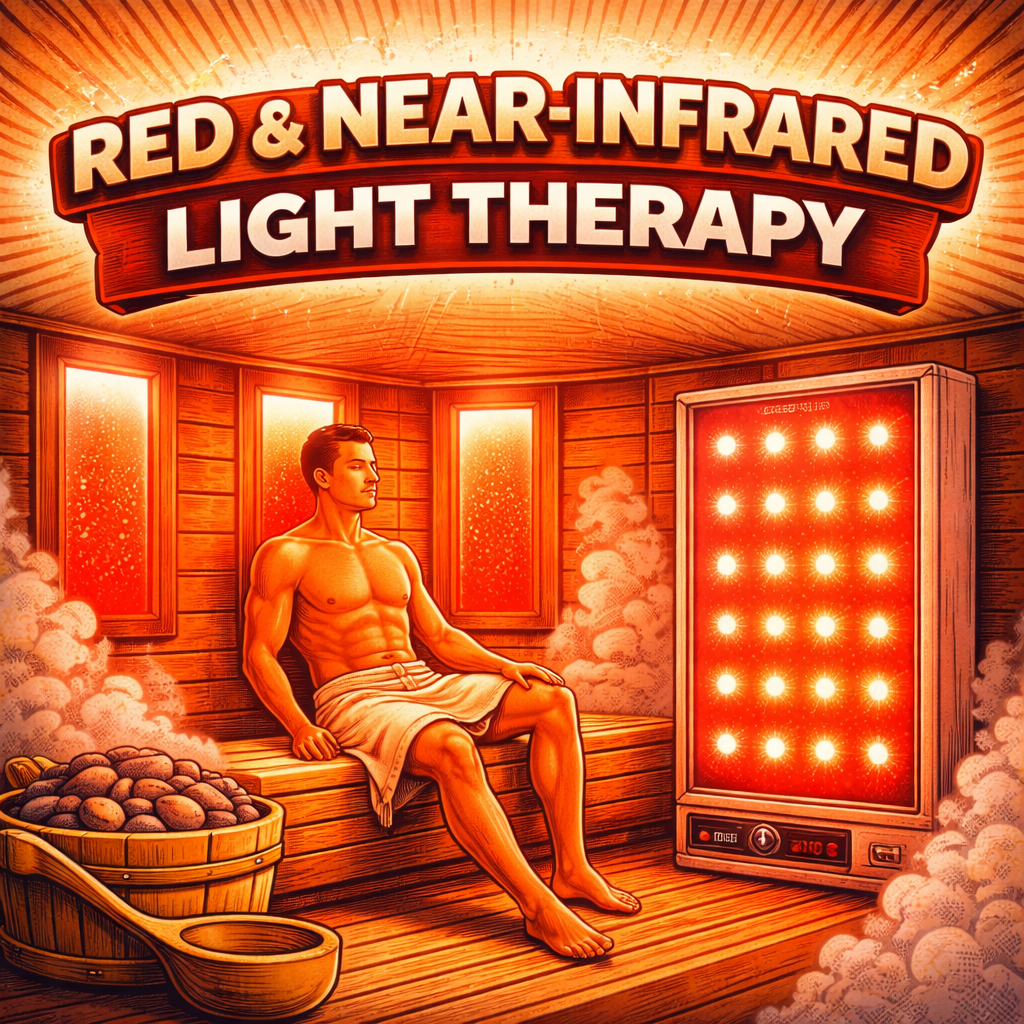
What Is Red and Near-Infrared Light Therapy?
Red and near-infrared light therapy refers to exposure to light in specific wavelength ranges, typically:
- Red light: roughly 620–750 nanometers
- Near-infrared light: roughly 750–1,100 nanometers
These wavelengths penetrate the skin more deeply than most visible light and have been studied for their interaction with cells, particularly in relation to circulation, inflammation, and tissue recovery.
Unlike chromotherapy, which uses colored LEDs primarily for visual effect, red and near-infrared light therapy is intended to deliver light at specific wavelengths and intensities. Check out this post for more information on chromotherapy.
How Red and Near-Infrared Light Therapy Is Different From Chromotherapy
This distinction is important for buyers.
Chromotherapy Lighting
- Uses visible colored LEDs
- Primarily affects ambiance and mood
- Often included as a standard sauna feature
- Not designed to deliver therapeutic light doses
Red and Near-Infrared Light Therapy
- Uses specific wavelengths
- Often requires higher-output panels or emitters
- Sometimes included in saunas, sometimes added separately
- Studied for potential biological effects
When research is cited in support of “light therapy,” it is almost always referring to red or near-infrared light, not to color-changing chromotherapy systems.
What the Evidence Suggests
Research into red and near-infrared light therapy is ongoing, but several areas are commonly discussed.
Circulation and Tissue Recovery
Some studies suggest that red and near-infrared light exposure may support circulation and cellular energy production. This has led to interest in light therapy for muscle recovery, joint comfort, and general physical recovery.
In a sauna context, these effects may complement heat exposure, although the two mechanisms are distinct.
Skin and Surface Tissue Effects
Red light therapy has been studied for potential effects on skin appearance and surface tissue health. This includes interest in collagen production and skin tone, though results vary depending on wavelength, intensity, and duration of exposure.
Again, these effects are associated with dedicated red light therapy, not general colored lighting.
Inflammation and Comfort
Some users report subjective improvements in comfort or stiffness after using red or near-infrared light therapy. While personal experience varies, this area continues to be explored in research settings.
It’s important to note that light therapy should not be viewed as a medical treatment or substitute for professional care.
How Red and Near-Infrared Light Are Used With Saunas
There are several common ways people combine light therapy with sauna use.
Integrated Sauna Systems
Some modern saunas include built-in red or near-infrared light panels. These systems are designed to allow light exposure during a sauna session, though output levels vary widely by manufacturer.
When evaluating these systems, it’s important to confirm that the light components are designed for therapeutic wavelengths—not simply colored LEDs.
Standalone Light Therapy Panels
Many people use red or near-infrared light therapy panels outside of the sauna, either before or after a session. This approach allows for more targeted exposure and avoids the challenge of delivering sufficient light output in a high-heat environment.
Standalone panels are often more powerful and flexible than integrated sauna options.
Limitations and Realistic Expectations
While red and near-infrared light therapy has a stronger evidence base than general chromotherapy, it is still not a cure-all.
Important limitations include:
- Results vary by individual
- Exposure time and intensity matter
- Not all devices deliver the same output
- Benefits are often incremental rather than dramatic
Overstated claims or guarantees should be viewed skeptically.
Should Red or Near-Infrared Light Influence Your Sauna Purchase?
For most buyers, red and near-infrared light therapy should be considered a supplemental feature, not a primary reason to choose one sauna over another.
Core sauna factors—such as heating method, size, build quality, and comfort—remain far more important. Light therapy may be a worthwhile addition for some users, but it should not overshadow fundamental considerations.
Final Thoughts
Red and near-infrared light therapy is distinct from chromotherapy and is supported by a growing body of research. When used appropriately, it may complement sauna use, particularly for recovery or comfort.
However, it’s best approached with realistic expectations and a clear understanding of how light therapy systems differ. As with many wellness tools, thoughtful use matters more than marketing claims.
