Infrared saunas have become one of the most popular options for home sauna ownership, largely because they are simpler and more convenient to use. They’re often described as gentler, easier to use, and more accessible than traditional saunas — but those descriptions can be misleading if you don’t understand what actually varies between models.
Unlike traditional saunas, infrared units typically require less installation, less ongoing upkeep, and less preparation before each session — you turn them on, step inside, and step out when you’re done.
This guide explains how infrared saunas work, what features matter when buying one, and how to choose a unit that fits your space, comfort level, and expectations — without overpaying or buying into marketing hype.
Heatandsteam.com may receive commissions on purchases made from the links on this page.
What an Infrared Sauna Actually Is
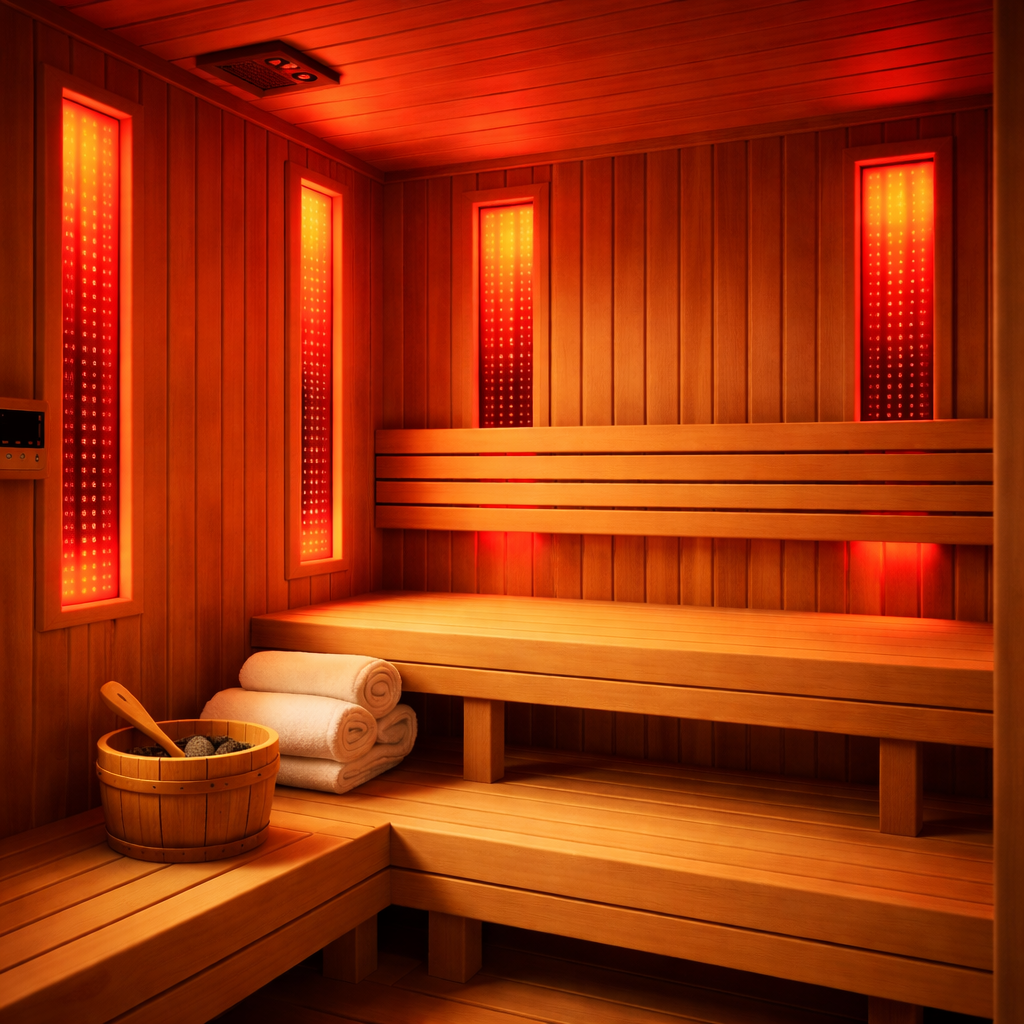
Infrared saunas heat the body more directly using infrared panels rather than heating the surrounding air to very high temperatures. Because of this, the air inside an infrared sauna usually feels cooler than a traditional sauna, even though the body still warms significantly.
This difference in heat delivery explains why infrared saunas feel more approachable for many people.
The way infrared saunas heat the body differs from traditional sauna heat.
Why People Choose Infrared Saunas
People often choose infrared saunas because they:
- Feel less overwhelming than high-heat saunas
- Can be used at lower air temperatures
- Are easier to install in many homes
- Require less ventilation planning
That said, infrared saunas trade heat intensity for accessibility, which is not inherently better or worse — just different.
Types of Infrared Heating Technology
One of the most confusing parts of buying an infrared sauna is heater type. Most consumer models fall into three broad categories.
Carbon Panel Heaters
Carbon panels are the most common heating element in modern infrared saunas.
They tend to:
- Produce even, gentle warmth
- Cover larger surface areas
- Feel less intense but more uniform
Many people prefer infrared saunas with carbon panel heating because the warmth feels more balanced and easier to tolerate for longer sessions.
[AFFILIATE LINK: link the words “infrared saunas with carbon panel heating” to an Amazon search for carbon infrared sauna]
Ceramic Heaters
Ceramic heaters are smaller, more focused heat sources.
They:
- Produce stronger localized heat
- Can feel hotter in specific areas
- Are sometimes used in combination with panels
Ceramic heaters aren’t necessarily better — they just deliver heat differently.
Full-Spectrum Infrared (With Context)
Some infrared saunas are marketed as “full spectrum,” meaning they emit multiple infrared wavelengths.
This term is often misunderstood and heavily marketed. In practice, build quality, panel placement, and overall design matter more than spectrum labels alone.
Panel Placement and Coverage
Where infrared panels are placed matters more than how many there are.
Panels may be located:
- Behind the back
- Along the sides
- In front of the body
- Under the feet
Better coverage generally leads to more consistent warmth.
Comfort during longer sessions depends heavily on how evenly heat is distributed.
Size, Capacity, and Real-World Fit
Infrared saunas are usually labeled by capacity (one-person, two-person, etc.), but these labels can be misleading.
Things to consider:
- Interior dimensions matter more than capacity labels
- Two adults may feel cramped in some “2-person” models
- Sitting vs reclining space changes comfort significantly
Many buyers find that choosing slightly larger than needed improves long-term satisfaction.
Electrical Requirements and Power
Most small infrared saunas run on standard household outlets, while larger units may require higher voltage.
Typical considerations include:
- 120V for smaller units
- Higher wattage for multi-person models
- Dedicated circuits for larger saunas
Understanding power needs early helps avoid installation surprises.
Wood Type and Build Quality
Infrared sauna cabins are typically made from softwoods such as:
- Hemlock
- Cedar
Differences in wood type affect:
- Appearance
- Aroma
- Weight
- Cost
Build quality, panel thickness, and door construction often matter more than wood species alone.
EMF Concerns (Addressed Calmly)
Many buyers encounter EMF discussions when researching infrared saunas. These concerns are often amplified by marketing language rather than context.
In practice:
- Most reputable manufacturers design for low emissions
- Distance from panels matters
- Anxiety often exceeds actual risk
It’s reasonable to be informed, but unnecessary to fixate.
How Hot Do Infrared Saunas Get?
Infrared saunas typically operate at lower air temperatures than traditional saunas.
This makes them feel:
- Less stifling
- Easier to stay in longer
- More approachable for beginners
Heat intensity feels different depending on temperature and humidity.
Portable vs Permanent Infrared Saunas
Infrared saunas come in both portable and permanent designs.
Portable models:
- Lower upfront cost
- Less durable
- Easier to store
Permanent models:
- Better heat retention
- Greater comfort
- Longer lifespan
Long-term use patterns often determine whether portability or durability matters more.
What Price Range Should You Expect?
Infrared sauna prices vary widely depending on size, materials, and build quality.
In general:
- Entry-level units focus on accessibility
- Mid-range units balance comfort and durability
- Higher-end units emphasize materials and space
Choosing based solely on price often leads to replacement sooner than expected.
Who an Infrared Sauna Is (and Isn’t) Best For
Infrared saunas tend to work well for:
- People sensitive to high heat
- Beginners
- Smaller homes or apartments
- Users who value convenience
They may be less satisfying for people who:
- Want intense heat
- Prefer steam
- Enjoy traditional sauna rituals
What Actually Matters Most When Buying
When choosing an infrared sauna, focus on:
- Comfort and heat feel
- Space and fit
- Electrical compatibility
- Build quality
- How often you’ll realistically use it
Specifications matter less than consistency.
Final Thoughts
Infrared saunas are popular because they lower the barrier to sauna use. They’re not a replacement for traditional saunas — they’re an alternative that works better for some people and situations.
The best infrared sauna is the one that fits your home, your comfort level, and your routine — not the one with the most marketing claims.
