Once you’ve decided to buy a home sauna, one of the next major choices is where the sauna will live. Indoor and outdoor saunas each offer real advantages, but they also come with different tradeoffs related to space, installation, maintenance, and how often you’ll realistically use them.
This guide explains the differences between indoor and outdoor home saunas so you can choose the option that fits your home and habits — not just your preferences.
Why Placement Matters More Than People Expect
Sauna ownership isn’t just about the sauna itself. Placement affects:
- How easy the sauna is to use
- How often it gets used
- Installation complexity
- Long-term maintenance
Many buying regrets come from underestimating how location influences daily use.
Convenience plays a major role in how consistently people use a home sauna.
Indoor Home Saunas
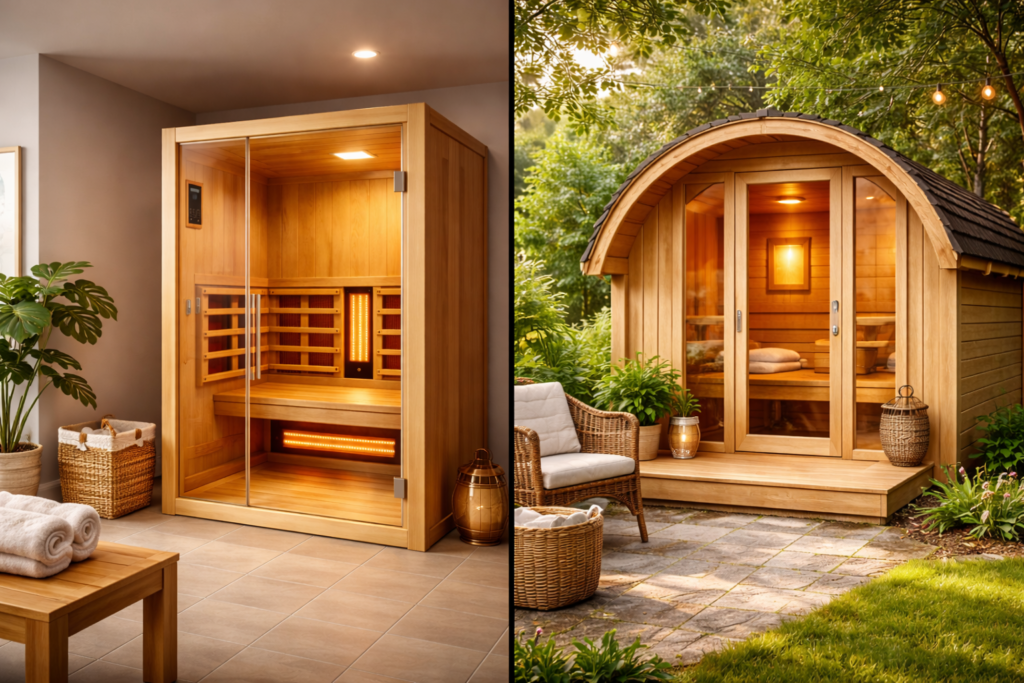
Indoor saunas are installed inside the home — often in basements, bathrooms, spare rooms, or dedicated wellness spaces.
Advantages of Indoor Saunas
Indoor saunas are appealing because they:
- Are easy to access year-round
- Require no outdoor weather exposure
- Feel integrated into daily routines
For many people, the ability to step into a sauna without going outside makes a significant difference.
Ease of access often leads to shorter but more frequent sauna sessions.
Challenges of Indoor Saunas
Indoor placement can introduce challenges, including:
- Limited available space
- Ventilation considerations
- Electrical requirements
- Moisture management
Indoor saunas work best when the surrounding environment is planned for heat and humidity.
Outdoor Home Saunas
Outdoor saunas are freestanding or detached units placed in yards, gardens, or near patios.
Advantages of Outdoor Saunas
Outdoor saunas offer:
- More space flexibility
- Strong sauna atmosphere
- Easier accommodation of larger units
Many people enjoy the separation between sauna use and indoor living spaces.
Outdoor saunas often provide a more traditional sauna experience.
Challenges of Outdoor Saunas
Outdoor saunas also come with tradeoffs:
- Exposure to weather
- Seasonal access considerations
- Higher installation costs
- Ongoing exterior maintenance
Cold climates can make outdoor saunas feel special — but also less convenient on busy days.
Installation Considerations
Electrical and Power Needs
Both indoor and outdoor saunas require appropriate power. Outdoor saunas may need:
- Trenching
- Weather-rated wiring
- Additional permits
Indoor saunas often require careful placement near existing electrical access.
Ventilation and Moisture
Ventilation matters more indoors, where heat and moisture can affect surrounding rooms.
Outdoor saunas naturally dissipate heat and humidity, but still require proper airflow.
Heat and humidity behave differently depending on where the sauna is installed.
[INTERNAL LINK: link the words “heat and humidity behave differently” to Sauna Temperature Ranges Explained]
Which Option Gets Used More?
In practice:
- Indoor saunas tend to be used more frequently
- Outdoor saunas tend to be used more intentionally
Neither is better — they support different habits.
If convenience is your priority, indoor placement often wins.
If atmosphere and ritual matter more, outdoor placement may be worth the tradeoff.
Common Ownership Mistakes
Some common mistakes include:
- Choosing outdoor placement without considering daily access
- Underestimating indoor ventilation needs
- Assuming larger is always better
- Overbuilding relative to actual use
Discomfort or inconvenience can reduce how often a sauna gets used.
What Actually Matters Most
When choosing between an indoor or outdoor home sauna, focus on:
- How often you realistically plan to use it
- How easy it is to access
- How much maintenance you’re willing to handle
- How it fits your living space
The best placement is the one that supports consistent, comfortable use.
Final Thoughts
Indoor and outdoor saunas each offer legitimate benefits. Indoor saunas favor convenience and consistency, while outdoor saunas favor atmosphere and flexibility.
There’s no universally correct choice — only the option that best fits your home, climate, and habits.
