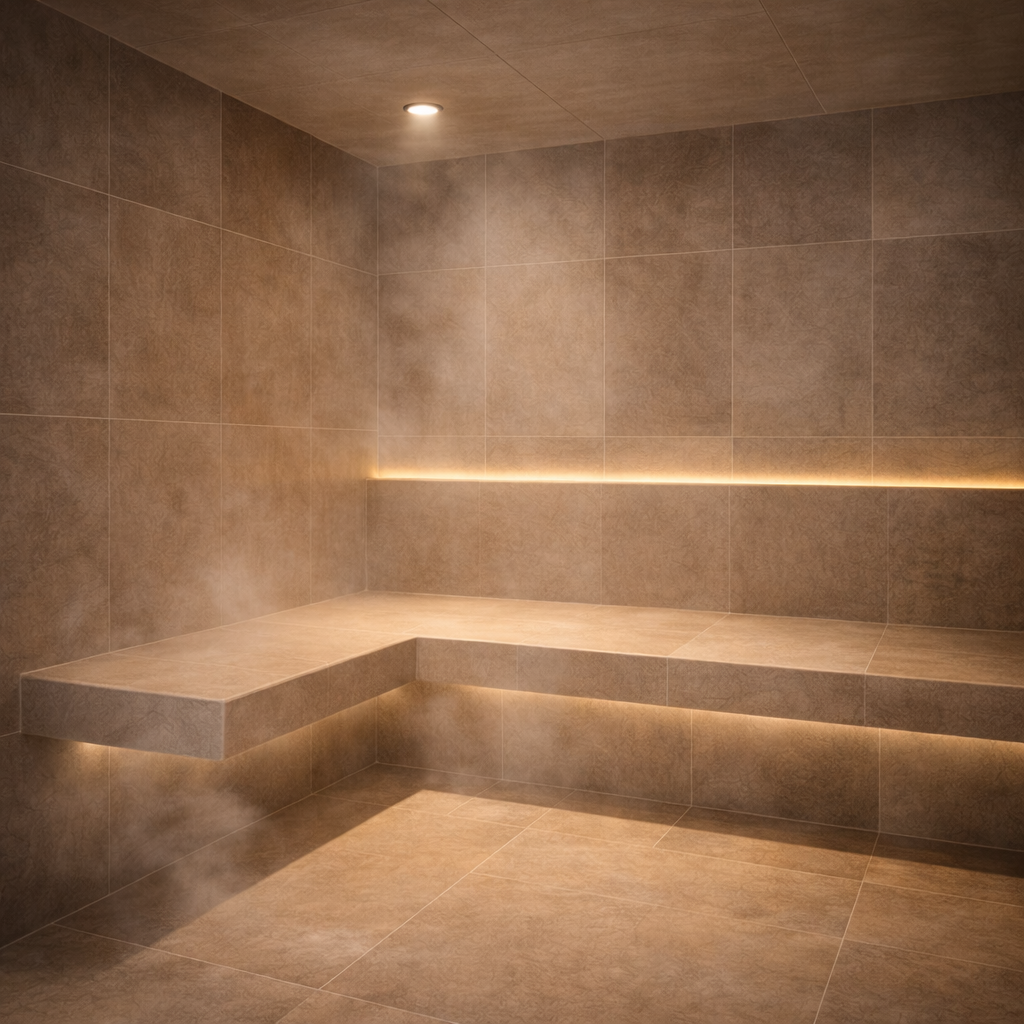
A home steam room is one of the simplest wellness upgrades you can add to a house—once you understand how it behaves. New owners often expect it to work like a sauna, or like a regular shower. It’s neither.
A steam room is about warmth + humidity + enclosure discipline. Most “problems” new owners experience are really just setup habits: timing, ventilation, seating comfort, and learning what normal steam performance looks like.
This guide walks you through exactly how to use a home steam room for the first time, what a typical session looks like, and how to avoid the most common early mistakes.
If you want the high-level overview of how a steam room system works, start here first.
Before Your First Session: Quick Setup Checklist
1) Make sure the room is dry and clean enough
You don’t need the room to be spotless, but you do want:
- No standing water on the floor
- No lingering odor (a sign the room isn’t drying well)
- No slippery residue on benches or tile
Here is a simple cleaning routine (and product/tool links) to use.
2) Know where your controls are (and what they actually do)
Most steam controls allow you to:
- Start/stop steam
- Set session time
- Adjust temperature limit (or steam intensity depending on system)
Controls are usually brand-specific and tied to your generator.
3) Close the enclosure fully
Steam rooms only work when the enclosure is treated like a sealed room:
- Close the door fully
- Confirm gaskets/seals are engaged
- Avoid leaving the door cracked “for comfort” (it defeats the system)
u
If your door leaks steam consistently, it can affect performance.
How Long Does It Take to Heat Up?
Most home steam rooms reach “full steam” in roughly 5–15 minutes, depending on:
- Generator size
- Room volume
- Glass and stone surfaces
- Ceiling height
- How well the enclosure holds steam
If your steam room always takes too long or never really fills, it’s usually a sizing or heat-loss issue.
[INTERNAL LINK: link the words “sizing or heat-loss issue” to Steam Room Generator Sizing Guide: How to Choose the Right Size]
A Simple Steam Room Session (Start Here)
If you’re new to steam, don’t overthink it. Use this basic structure for the first few sessions.
Step 1: Start the generator and set a short session
Set the session to 10–15 minutes for your first few uses. You can extend later.
Step 2: Sit down early
Steam rises. Sitting earlier helps your body acclimate gradually and makes the experience more comfortable.
If you’re uncomfortable on tile benches, a steam-safe cushion can make a big difference.
Suggested outbound anchor text: “Browse steam room seat cushions on Amazon” (optional)
Step 3: Focus on comfort, not “max heat”
Steam rooms feel hot because humidity changes how heat is experienced. Comfort matters more than chasing a number.
Step 4: End before you feel wiped out
A good steam session ends when you still feel clear and steady—not dizzy, overheated, or drained.
How Long Should You Stay in a Steam Room?
Most home users settle into a pattern like:
- 10–20 minutes per session
- 1–3 rounds with breaks (optional)
Your best guide is comfort. If you feel lightheaded, overheated, or unusually fatigued, end the session.
If you want a dedicated time guide (with realistic ranges), you can create one later as a standalone post. For now, your best “time logic” lives inside your safety article.
What to Do During the Session
Sit, breathe, and let steam do what it does
Steam rooms are not performance events. They are low-effort by design.
Optional enhancements:
- A cool cloth for your face
- A steam-safe scent (eucalyptus is the most common)
- Soft lighting if you have it
Read this post if you’re interested in safe scent options and delivery systems.
Read this post if you want lighting and chromotherapy options that hold up in steam.
After the Session: The Two Habits That Prevent Most Problems
1) Let the room dry completely
This is the single biggest “ownership” habit:
- Leave the door open after use
- Run the exhaust fan if you have one
- If no fan, use airflow from the bathroom and give it time
Most odor and mildew issues start with trapped moisture.
2) Quick wipe-down of high-contact surfaces
Wipe:
- Bench area you sat on
- Door handle area
- Any ledges that collect droplets
This turns deep cleaning from a dreaded job into an occasional routine.
Common First-Time Mistakes (and How to Avoid Them)
Mistake 1: Treating it like a sauna
Steam rooms are lower temperature but higher humidity. They feel different, and the “right” use is comfort-based.
Mistake 2: Cracking the door open during steam
This causes:
- weak steam buildup
- long warm-up times
- inconsistent sessions
Mistake 3: Ignoring minor steam leakage
Minor leakage is normal in many homes. Constant visible steam outside the enclosure is not.
Mistake 4: Not sizing expectations correctly
If your room is large, glass-heavy, or has high ceilings, performance depends heavily on generator sizing.
What Normal Steam Room Performance Looks Like
A healthy, properly working home steam room usually looks like:
- Steam begins to build within several minutes
- The room becomes evenly humid
- The bench and walls develop condensation
- Steam output cycles (it doesn’t blast constantly forever)
If you notice weak steam, cold spots, frequent shutoffs, or persistent odors, you’re not alone—those issues are common and fixable.
Final Thoughts
Using a home steam room should be easy. The “secret” is not a special technique—it’s consistent habits:
- Start with shorter sessions
- Prioritize comfort
- Let the room dry afterward
- Keep surfaces clean enough that problems never build momentum
If you’re still building your system or planning upgrades, your next step is the main planning guide.
