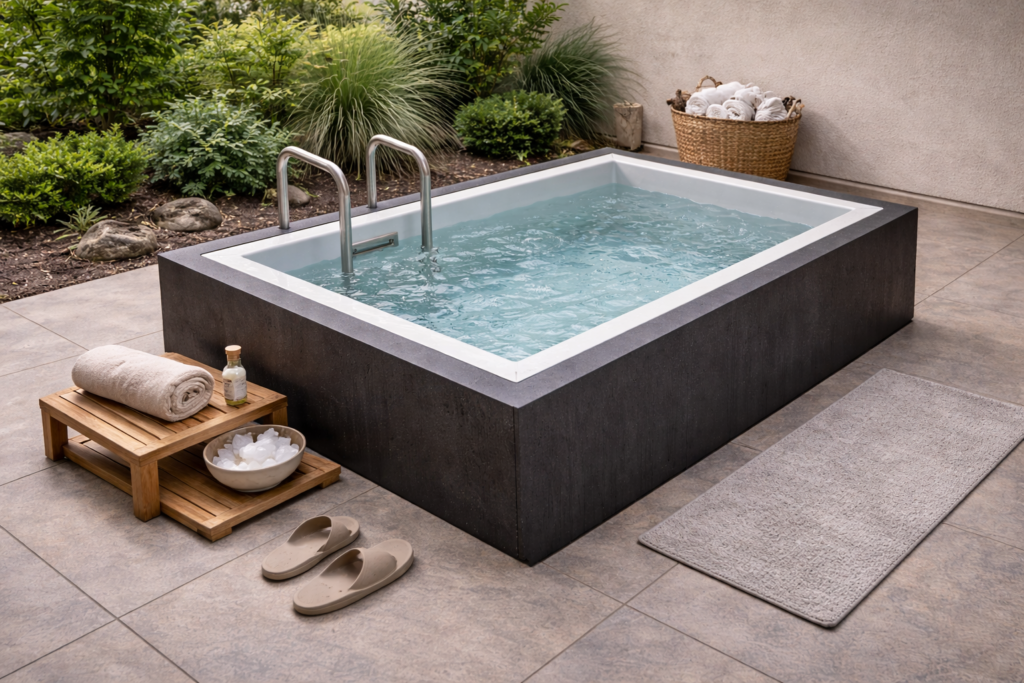
Cold plunging has become part of many people’s wellness routines, but frequency is one of the most common points of confusion. Some people plunge daily, others a few times per week, and many wonder whether more is always better.
This guide explains how often most people use a cold plunge, what factors affect ideal frequency, and how to build a routine that’s sustainable rather than extreme.
If you’re still setting up your system, start with the broader overview first.
The Short Answer: Most People Plunge 2–4 Times Per Week
For the average home user, 2 to 4 cold plunge sessions per week is the most common and sustainable range.
This frequency:
- Delivers noticeable benefits
- Allows adequate recovery
- Reduces burnout and dropout
- Fits easily into most schedules
Daily plunging is possible, but it isn’t necessary for most people.
Cold Plunge Frequency by Experience Level
Beginners
1–2 times per week
If you’re new to cold exposure:
- Start conservatively
- Focus on consistency, not intensity
- Keep sessions short
Your body needs time to adapt to cold stress. Starting slow improves adherence and comfort.
Regular Users
2–4 times per week
This is the “sweet spot” for most home users.
At this frequency:
- Cold tolerance improves steadily
- Sessions feel energizing rather than draining
- Recovery between sessions remains manageable
Many people settle into this range long-term.
Advanced or Daily Users
5–7 times per week
Daily cold plunging is common among:
- Athletes
- Very cold-adapted users
- People with established routines
That said, daily plunging isn’t inherently better — and for some people, it can increase fatigue or blunt recovery if overused.
How Long Each Cold Plunge Should Be
Frequency and duration work together.
Typical session lengths:
- 30 seconds to 2 minutes for beginners
- 2–5 minutes for experienced users
Longer sessions don’t require higher frequency. Many people plunge less often but stay in slightly longer.
For timing guidance, see: How Long Should You Stay in a Cold Plunge?
Factors That Affect How Often You Should Plunge
Training Load
People doing intense physical training may benefit from more frequent cold exposure — or may need less, depending on goals.
Cold plunging immediately after strength training can interfere with muscle growth if overused.
Recovery and Sleep
If cold plunging:
- Improves sleep → frequency may be appropriate
- Disrupts sleep → reduce frequency or move sessions earlier
Listen to downstream effects, not just how the plunge feels.
Stress and Fatigue
Cold exposure is a stressor.
Signs you may be plunging too often:
- Persistent fatigue
- Irritability
- Reduced motivation
- Dreading sessions
These are signals to scale back.
Is Daily Cold Plunging Safe?
For healthy individuals, daily cold plunging is generally safe, but not universally beneficial.
Daily use makes sense when:
- Sessions are brief
- Temperatures are moderate
- Recovery is good
It becomes counterproductive when:
- Used excessively
- Combined with heavy training and poor sleep
- Treated as a test of willpower rather than a tool
More is not always better.
Cold Plunge Frequency vs Water Maintenance
More frequent plunging means:
- Faster water contamination
- Greater filtration demand
- More frequent cleaning
If you plunge often, water care becomes more important.
Common Cold Plunge Frequency Mistakes
- Starting with daily plunges immediately
- Copying influencer routines without context
- Using cold exposure to override exhaustion
- Treating discomfort as a requirement
Cold plunging should be challenging, not punishing.
Building a Sustainable Cold Plunge Routine
A simple, realistic approach:
- Start with 2 sessions per week
- Increase only if recovery is good
- Keep sessions short and consistent
- Take breaks when needed
Cold plunging works best as a habit, not a challenge.
Final Thoughts
Most people don’t need to cold plunge every day to benefit. For long-term use, 2–4 sessions per week strikes the best balance between effectiveness and sustainability.
The right frequency is the one you can maintain comfortably — not the one that looks most impressive on paper.
