Heatandsteam.com may receive commissions on purchases made from the links on this page.
Cold plunge tubs are only as good as their ability to stay cold. While ice can work occasionally, most home users eventually move to a dedicated cold plunge water chiller for consistency, convenience, and long-term use.
This buyer’s guide explains how cold plunge chillers work, which types make sense for home setups, what specs actually matter, and which brands are trusted by serious cold plunge users.
If you’re new to cold plunging, start with the full overview first.
What Is a Cold Plunge Water Chiller?
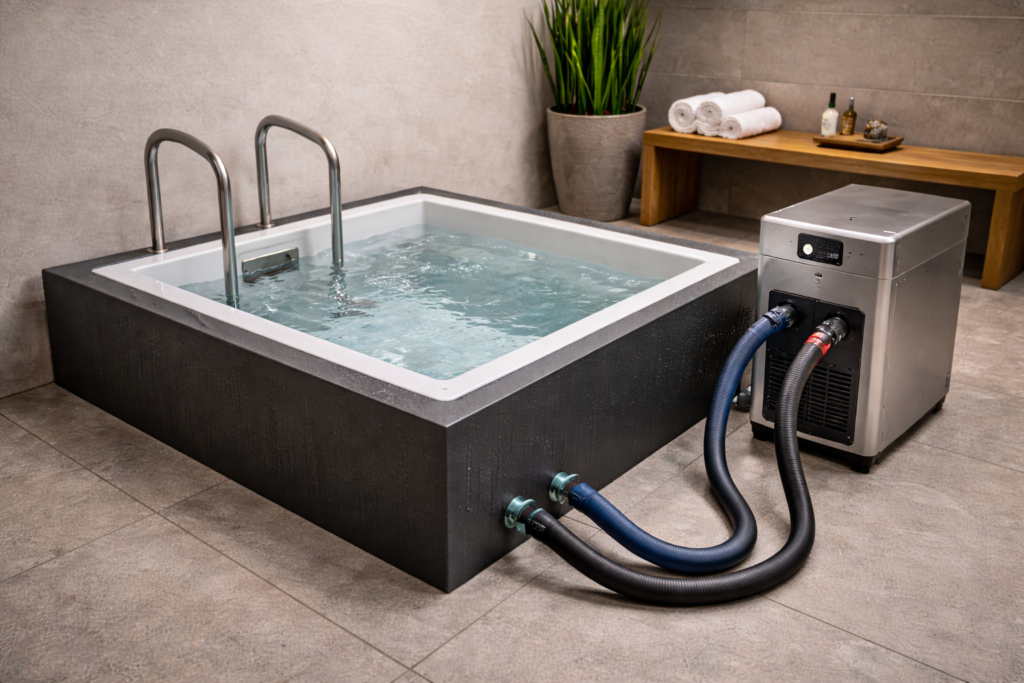
A cold plunge chiller is a standalone cooling unit that circulates water from your tub, cools it using refrigeration, and returns it at a controlled temperature.
Unlike ice baths, a chiller allows you to:
- Maintain consistent water temperature
- Avoid daily ice purchases
- Use your plunge more frequently
- Set exact temperature targets
Most home systems combine a tub + external chiller + pump + filter.
Do You Need a Chiller for Home Cold Plunge Use?
Not everyone needs one — but most regular users eventually do.
Ice-Only Setups (When They Make Sense)
Ice baths may work if:
- You plunge occasionally
- You live in a very cold climate
- You’re experimenting before committing
However, ice becomes expensive, inconsistent, and inconvenient over time.
Chiller-Based Setups (Best for Most Home Users)
A water chiller makes sense if:
- You plunge multiple times per week
- You want repeatable temperatures
- You don’t want daily ice logistics
- You’re building a permanent home setup
For most homeowners, a chiller is the difference between trying cold plunges and actually using them long term.
Types of Cold Plunge Water Chillers
Dedicated Cold Plunge Chillers
Purpose-built units designed specifically for plunge tubs.
Pros
- Optimized temperature ranges
- Built-in circulation and safety features
- Cleaner installation
Cons
- Higher upfront cost
Best for: permanent home setups and daily users.
Aquarium / Industrial Water Chillers
Adapted from aquarium or industrial cooling systems.
Pros
- Often less expensive
- Widely available
- Flexible sizing options
Cons
- Louder
- Less efficient at very low temps
- May require DIY plumbing
Best for: budget-conscious or DIY setups.
Key Specs That Actually Matter
Cooling Capacity (HP or BTU)
This determines how fast and how cold your water gets.
General guidelines:
- Small tubs / barrels: 1/4 – 1/3 HP
- Standard tubs: 1/2 HP
- Large or outdoor tubs: 3/4 – 1 HP+
Undersizing leads to long cooldown times and temperature drift.
Minimum Temperature
Many chillers advertise cooling but can’t reach true plunge temperatures.
Look for units rated to:
- 40°F (4°C) or lower
- Ideally adjustable into the mid-30s if desired
Flow Rate Compatibility
Your chiller must match your pump’s flow rate.
Too little flow = inefficient cooling
Too much flow = system strain
Most home systems operate between 300–800 GPH.
Filtration & Sanitation Compatibility
Some chillers integrate with:
- Inline filters
- Ozone systems
- UV sanitation
Others require separate components.
For maintenance simplicity, compatibility matters.
Noise & Placement
Chillers contain compressors and fans.
Consider:
- Indoor vs outdoor placement
- Distance from living spaces
- Weather protection if installed outside
Trusted Cold Plunge Chiller Brands
Purpose-Built Cold Plunge Brands
- AS Cold Plunge Water Chiller ( Amazon / Walmart)
- Eonix Water Chiller ( Amazon )
- Ice Bound Essentials 1HP Pro Cold Plunge Chiller (Walmart / Wayfair)
- Polar Dive (Best Buy / Lowes / Target / Tractor Supply / Walmart)
These systems are designed to work together and are easiest to own long-term.
Aquarium / Industrial Chiller Brands
- Ecojoy Aquarium Water Chiller (Walmart)
- Omtech Industrial Chiller (Amazon)
- Vervor Water Chiller for Aquarium (Amazon)
These are often used in DIY or modular builds and are widely available through online retailers.
Common Mistakes When Buying a Chiller
- Undersizing for tub volume
- Assuming all chillers reach plunge temps
- Ignoring flow rate requirements
- Placing outdoor units without weather protection
- Forgetting filtration and sanitation
Many cold plunge problems trace back to chiller selection.
How a Chiller Affects Ongoing Costs
Chillers add:
- Electricity usage
- Filter replacements
- Occasional servicing
However, they replace ongoing ice costs, which often exceed chiller operating expenses over time.
Is a Chiller Worth It?
For most serious home users: yes.
A good chiller:
- Makes cold plunging convenient
- Encourages consistent use
- Protects water quality
- Turns a novelty into a routine
If you’re already committed to cold exposure, a chiller is one of the most impactful upgrades you can make.
Final Thoughts
Cold plunge water chillers are not one-size-fits-all. The right choice depends on tub size, usage frequency, temperature goals, and whether you want a turnkey or DIY setup.
Choose capacity first, temperature second, and brand reliability third — and you’ll avoid most common issues.
For related upgrades, see:
