Heatandsteam.com may receive commissions on purchases made from the links on this page.
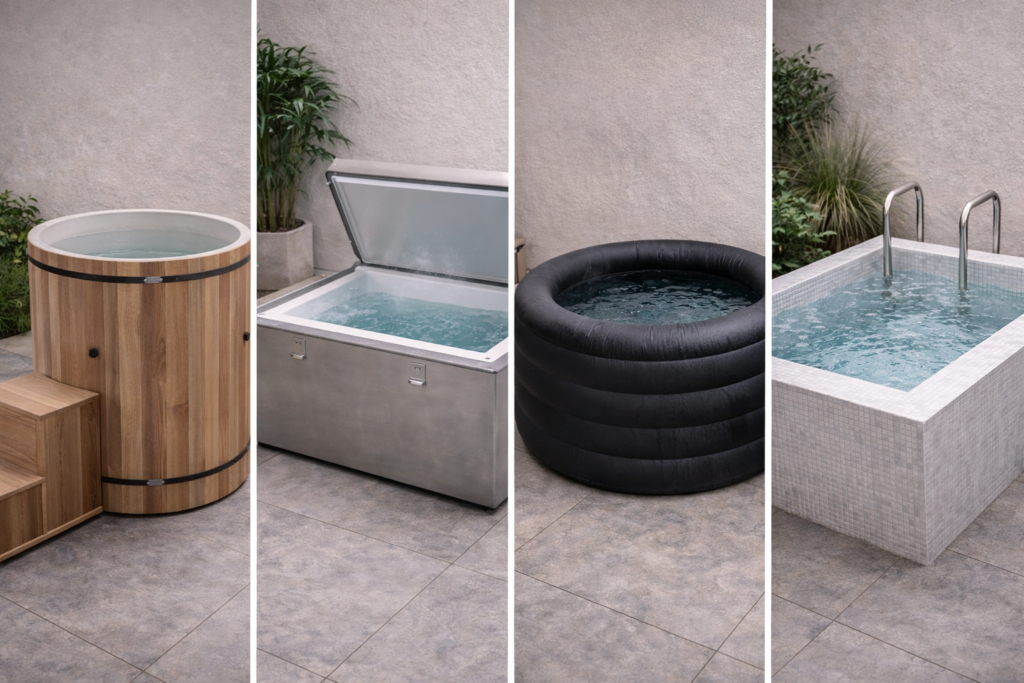
Not all cold plunge tubs are built the same. While they all serve the same basic purpose — cold water immersion — the shape, construction, and setup of the tub dramatically affect comfort, maintenance, cost, and long-term use.
This guide explains the main types of cold plunge tubs used in homes today, what each does well, where each falls short, and which type tends to make sense for different users.
If you’re still deciding whether a cold plunge is right for you at all, start with the broader overview.
Barrel-Style Cold Plunge Tubs
Barrel tubs are one of the most recognizable cold plunge designs. They are typically tall, narrow, and cylindrical, encouraging a vertical immersion position.
What They’re Like
- Upright, standing or seated posture
- Smaller footprint than horizontal tubs
- Often made from plastic, fiberglass, or wood-look composites
Pros
- Space-efficient for small areas
- Encourages full-body immersion quickly
- Often less expensive than large horizontal tubs
Cons
- Less comfortable for longer sessions
- Limited ability to stretch or recline
- Entry and exit can feel awkward for some users
Best For
- Small home gyms or garages
- Users who prefer short, intense plunges
- People prioritizing space over lounging comfort
View barrel-style cold plunge tub — Amazon / Home Depot / Wayfair
Chest-Style (Horizontal) Cold Plunge Tubs
Chest-style tubs resemble a large ice chest or freezer in shape, though purpose-built cold plunge models are designed specifically for immersion.
What They’re Like
- Horizontal layout
- Allows reclining or semi-reclining posture
- Larger water volume
Pros
- More comfortable for longer sessions
- Easier to relax shoulders and legs
- Familiar layout for many users
Cons
- Requires more floor space
- Higher water volume means more cooling demand
- Heavier when filled
Best For
- Daily or frequent cold plungers
- Recovery-focused users
- People who want a calmer, less compressed experience
View chest-style cold plunge tubs — Amazon / Home Depot / Wayfair
Inflatable Cold Plunge Tubs
Inflatable tubs are the most accessible entry point into cold plunging and are widely used by beginners.
What They’re Like
- Soft, inflatable walls
- Lightweight and portable
- Often paired with ice rather than a chiller
Pros
- Lowest upfront cost
- Easy to store and transport
- Good for testing whether cold plunging fits your routine
Cons
- Poor insulation compared to rigid tubs
- Less durable long-term
- Can feel unstable during entry and exit
Best For
- Beginners experimenting with cold plunging
- Temporary setups
- People who don’t want a permanent installation
View inflatable cold plunge tubs — Amazon / Home Depot / Wayfair
If you’re considering ice-only setups, see: ice-based setups,
Built-In and Custom Cold Plunge Tubs
Built-in cold plunges are typically permanent installations, often found in high-end home gyms, spas, or outdoor wellness areas.
What They’re Like
- Fully integrated into floors or decks
- Often tiled or concrete-lined
- Paired with dedicated chillers and filtration
Pros
- Best aesthetics
- Highly customizable size and depth
- Longest lifespan when properly built
Cons
- Highest upfront cost
- Requires professional installation
- Not portable or easily modified later
Best For
- Long-term homeowners
- Dedicated wellness spaces
- Users planning to plunge for years
[AFFILIATE / SKIMLINK PLACEMENT: custom plunge tub components or professional plunge systems]
For installation considerations, see:
[INTERNAL LINK: link the words “installation considerations” to Cold Plunge Installation Guide]
Other Design Variations You’ll See
Some tubs don’t fit neatly into one category:
- Converted stock tanks (galvanized or plastic)
- Freezer conversions (DIY, not recommended for most users)
- Hybrid tubs designed specifically for chiller integration
Each comes with trade-offs in safety, insulation, and reliability.
How Tub Type Affects Cost
Tub style directly affects:
- Purchase price
- Water volume
- Chiller size requirements
- Maintenance effort
For a full breakdown, see: overall cost.
Which Type Makes the Most Sense for Most Homes?
For most home users:
- Inflatable tubs → best for beginners
- Chest-style tubs → best balance of comfort and durability
- Barrel tubs → best for small spaces and short sessions
- Built-in tubs → best for long-term, high-budget installations
There’s no single “best” option — only the best fit for how often you’ll use it and how permanent you want the setup to be.
Final Thoughts
Choosing the right type of cold plunge tub matters more than chasing extreme temperatures or expensive add-ons. Comfort, durability, and ease of use determine whether a cold plunge becomes a habit or a novelty.
Start with the tub style that fits your space and routine — you can always upgrade accessories later.
