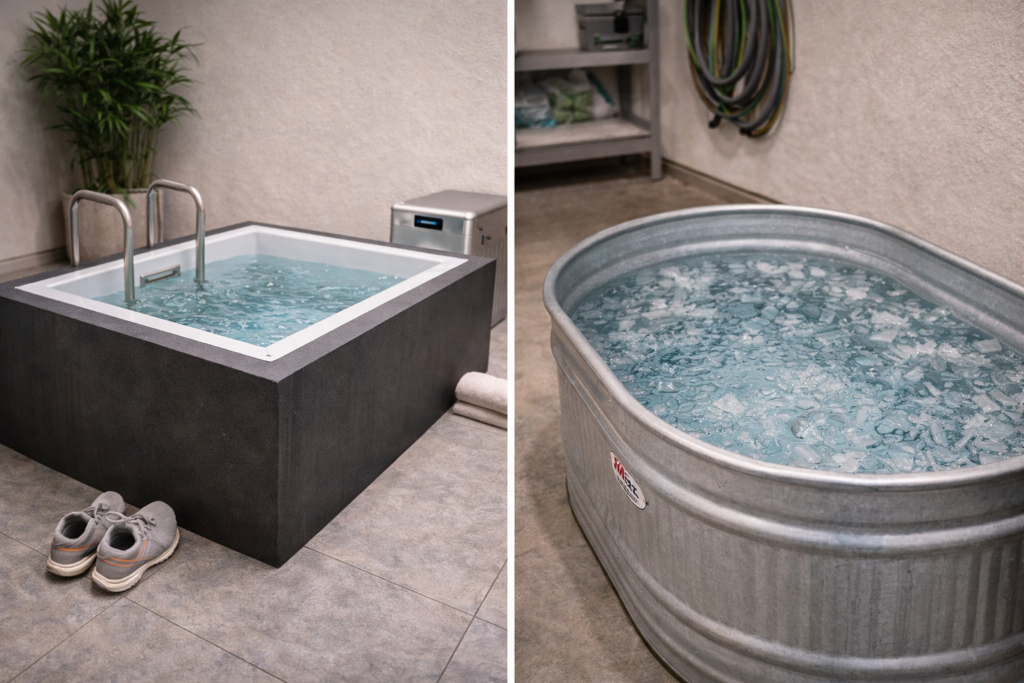
People often use the terms cold plunge and ice bath interchangeably, but they’re not the same thing. While both involve cold water immersion, they differ significantly in equipment, temperature control, cost, convenience, and long-term use.
This guide explains the real differences so you can decide which option makes more sense for your home, routine, and goals.
What Is a Cold Plunge?
A cold plunge is a dedicated tub designed specifically for cold water immersion. It’s typically paired with a water chiller, filtration system, or both, allowing the water temperature to stay consistently cold without adding ice.
Cold plunges are usually:
- Purpose-built tubs (acrylic, fiberglass, stainless steel, or rotomolded plastic)
- Connected to an electric chiller or integrated cooling system
- Designed for repeated, long-term use
Most home cold plunge setups maintain water temperatures between 39°F and 55°F, depending on preference.
If you’re looking for a full breakdown of types and costs: home cold plunge setups.
What Is an Ice Bath?
An ice bath is a temporary cold water setup created by filling a tub or container with water and adding ice to lower the temperature.
Common ice bath setups include:
- Bathtubs
- Stock tanks
- Plastic barrels
- Inflatable tubs
Ice baths rely entirely on manual ice addition, which means the water warms quickly and requires frequent refilling.
Ice baths are often used for:
- Short-term recovery
- Occasional use
- Travel or temporary setups
Temperature Control: The Biggest Difference
Cold Plunge
- Actively cooled with a chiller
- Stable, repeatable temperature
- No ice required
- Can stay cold 24/7
Ice Bath
- Temperature drops only after adding ice
- Warms quickly during use
- Requires large amounts of ice
- Temperature varies from session to session
If consistency matters to you, this is where cold plunges clearly outperform ice baths.
Convenience and Daily Use
Cold plunges are designed to be easy to use daily:
- Turn it on
- Get in
- Get out
Ice baths require more effort:
- Buy or make ice
- Carry and dump ice
- Drain and refill more often
- Clean more frequently
For people trying to build a consistent cold exposure habit, convenience becomes a major factor.
Cost Comparison
Ice Bath (Lower Upfront Cost)
- Tub or container: low cost
- Ice: ongoing expense
- Minimal equipment
Cold Plunge (Higher Upfront Cost)
- Dedicated tub
- Chiller or cooling system
- Optional filtration and sanitation
While ice baths are cheaper to start, long-term ice costs and inconvenience often push frequent users toward a cold plunge.
For a detailed breakdown: long-term cost difference.
Cleanliness and Water Quality
Cold plunges typically include:
- Filtration
- Ozone or UV sanitation
- Longer water life between changes
Ice baths often:
- Require frequent draining
- Accumulate debris quickly
- Rely on manual cleaning
Maintenance matters more the more often you use cold immersion.
Space and Setup
Ice baths:
- Flexible placement
- Easy to store or move
- Good for limited space
Cold plunges:
- Require dedicated space
- Need electrical access for chillers
- Often installed indoors or on patios
If space is limited, an ice bath may be the practical starting point.
Which Is Better for Recovery?
Both methods can support recovery by:
- Reducing perceived soreness
- Improving tolerance to cold stress
- Encouraging parasympathetic response
The difference isn’t the cold itself — it’s how often and how consistently you can use it.
Consistency favors cold plunges. Occasional use favors ice baths.
Which Makes More Sense at Home?
Choose an ice bath if:
- You’re experimenting with cold exposure
- You want the lowest upfront cost
- You’ll use it occasionally
Choose a cold plunge if:
- You want daily or frequent use
- You value temperature consistency
- You don’t want to deal with ice
- You’re building a long-term routine
Final Thoughts
Cold plunges and ice baths both work — but they serve different users.
Ice baths are simple, temporary, and inexpensive to start. Cold plunges are purpose-built, consistent, and easier to maintain long-term. The right choice depends less on “which is better” and more on how you plan to use it.
If you’re still deciding, these guides help narrow things down:
