Heatandsteam.com may receive commissions on purchases made from the links on this page.
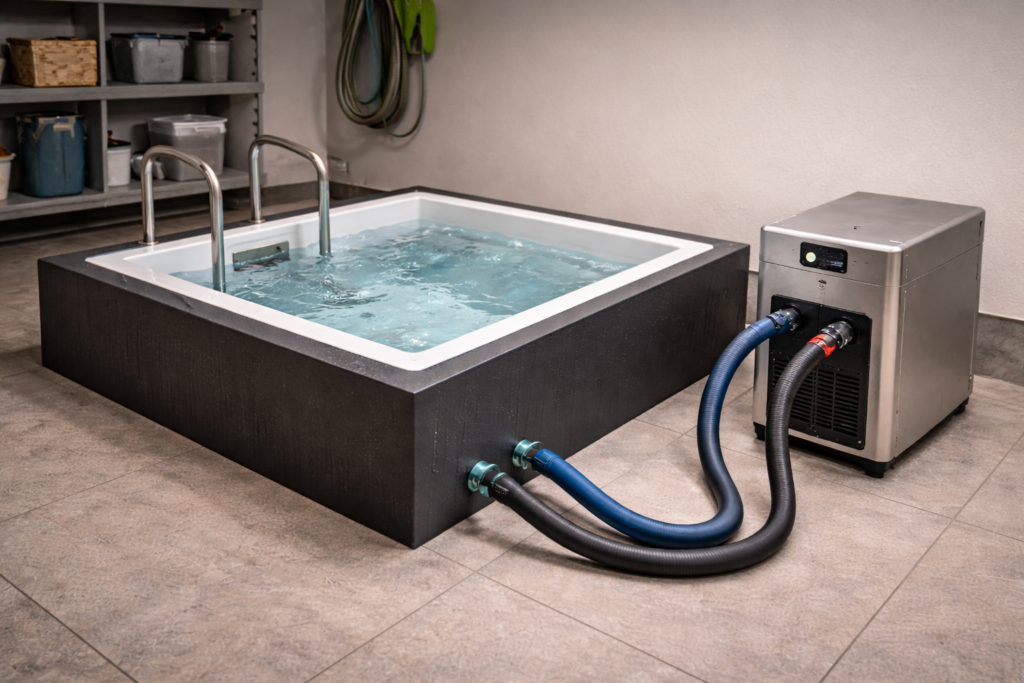
A cold plunge is only as good as its ability to stay cold. While ice-based setups can work temporarily, most home users eventually want a dedicated water chiller that delivers consistent temperatures with less daily effort.
This guide covers the best cold plunge water chillers for home use, which types make sense for different setups, and how to choose the right option without overbuying.
If you’re still deciding on a tub, start with the full overview first.
Why a Dedicated Cold Plunge Chiller Matters
Ice works — but it comes with drawbacks:
- Ongoing cost and storage
- Inconsistent temperatures
- Daily setup and cleanup
- Limited session flexibility
A proper chiller solves these problems by:
- Holding water at a set temperature (often 37–55°F)
- Allowing spontaneous use
- Reducing long-term operating hassle
- Improving overall consistency
For many home users, a chiller is the single most important upgrade.
Types of Cold Plunge Water Chillers
Ice Bath Chillers (DIY-Friendly)
These chillers are often adapted from aquarium, hydroponic, or industrial cooling systems.
Best for:
DIY tubs, chest-freezer conversions, budget-conscious setups
Pros
- Lower upfront cost
- Flexible with custom tubs
- Widely available
Cons
- External plumbing required
- Less polished appearance
- May require trial-and-error setup
Prosumer Cold Plunge Chillers
Designed specifically for cold plunge use but sold as standalone chillers.
Best for:
Home users who want reliability without a full turnkey system
Pros
- Designed for cold water immersion
- Better temperature stability
- Cleaner integration than DIY chillers
Cons
- Higher cost than DIY
- Still requires plumbing and filtration planning
Integrated Chiller + Tub Systems
The chiller is built into the plunge tub or sold as a matched system.
Best for:
Users who want plug-and-play simplicity
Pros
- Cleanest appearance
- Minimal setup
- Optimized performance
Cons
- Highest upfront cost
- Less flexibility for future changes
Best Cold Plunge Water Chillers by Category
Best DIY-Friendly Chiller
Active Aqua 1/4 HP Water Chiller (Amazon / Home Depot / Overstock / Walmart)
A long-standing favorite in DIY cold plunge builds.
Why it works
- Reliable compressor
- Suitable for small-to-medium tubs
- Widely supported in DIY communities
Best for:
Chest freezer conversions, stock tanks, custom builds
Best Mid-Range Cold Plunge Chiller
Ice Barrel Chiller – Standalone Unit ( Amazon )
Purpose-built for cold plunge use with cleaner integration than DIY options.
Why it works
- Designed for cold water immersion
- Compatible with multiple tub styles
- Easier setup than generic chillers
Best for:
Home users upgrading from ice without committing to a full system
Best High-Performance Home Chiller
Plunge Pro Chiller ( Plunge )
A powerful unit capable of maintaining low temperatures even with frequent use.
Why it works
- Strong cooling capacity
- Fast pull-down times
- Built for regular daily plunging
Best for: Dedicated cold plunge users and athletes
Best All-In-One System
Cold Plunge by Plunge ( Plunge )
An integrated tub and chiller system designed for simplicity.
Why it works
- Plug-and-play
- Built-in filtration
- Minimal maintenance
Best for:
Users who value convenience over customization
How to Choose the Right Chiller Size
Chiller sizing depends on:
- Water volume (gallons)
- Target temperature
- Ambient air temperature
- Frequency of use
General guidance:
- Small tubs (80–100 gal): 1/4 HP
- Medium tubs (100–150 gal): 1/3–1/2 HP
- Large tubs (150+ gal): 1/2 HP or higher
Undersizing is one of the most common mistakes.
Filtration and Sanitation Considerations
Most chillers do not filter water on their own.
You’ll often need:
- Inline filter
- Skimmer or debris trap
- Periodic water treatment
For a full breakdown, see: water care and filtration.
Noise, Power, and Placement
Chillers contain compressors and fans.
Before buying, consider:
- Indoor vs outdoor placement
- Noise tolerance
- Electrical requirements (standard 120V vs 240V)
Garage, basement, or outdoor enclosures are common placements.
Common Cold Plunge Chiller Mistakes
- Buying undersized units
- Ignoring filtration needs
- Poor airflow around the chiller
- Expecting ice-bath chillers to perform like commercial systems
Many performance complaints trace back to installation, not the unit itself.
Is a Cold Plunge Chiller Worth It?
For occasional use, ice may be enough.
For regular use, a chiller:
- Saves time
- Improves consistency
- Makes cold plunging sustainable long-term
Most frequent users eventually upgrade.
Final Thoughts
A good cold plunge chiller transforms cold water immersion from a chore into a habit. Whether you choose a DIY solution or a turnkey system depends on budget, space, and how often you plan to plunge.
If you’re building a home setup, prioritize cooling capacity and reliability over aesthetics — consistency matters more than polish.
