Heatandsteam.com may receive commissions on purchases made from the links on this page.
Cold plunge tubs are simple systems, but they operate in a way that makes water quality and routine maintenance essential. Cold temperatures slow bacterial growth, but they do not eliminate it — and neglect can lead to cloudy water, odors, or unnecessary wear on pumps and chillers.
The good news is that cold plunge maintenance is straightforward. With a few consistent habits and the right tools, most owners can keep their plunge clean without daily draining or complicated chemical routines.
This guide explains what actually matters, how often to clean, and which tools make ownership easier.
If you’re still choosing a tub, start with the main overview first.
How Cold Plunge Maintenance Differs From Pools or Hot Tubs
Cold plunge tubs operate differently than traditional water systems:
- Water is cold (usually 40–55°F)
- Sessions are short
- Bather load is low
- Water volume is smaller
Because of this, cold plunges typically require:
- Less chemical intervention
- More emphasis on filtration
- Regular but light cleaning
They do not require the same aggressive treatment as hot tubs or swimming pools.
Daily and After-Use Habits That Prevent Problems
Most cold plunge issues are caused by skipped basics, not equipment failure.
Rinse before plunging
A quick rinse removes sweat, lotions, and oils that degrade water quality.
This one habit dramatically reduces maintenance needs.
Cover the tub when not in use
An insulated cover:
- Keeps debris out
- Slows temperature fluctuation
- Reduces contamination
Accessory note:
Many owners upgrade to a dedicated insulated plunge cover for convenience.
Weekly Cold Plunge Maintenance Tasks
Skim debris
Leaves, hair, and sediment should be removed weekly.
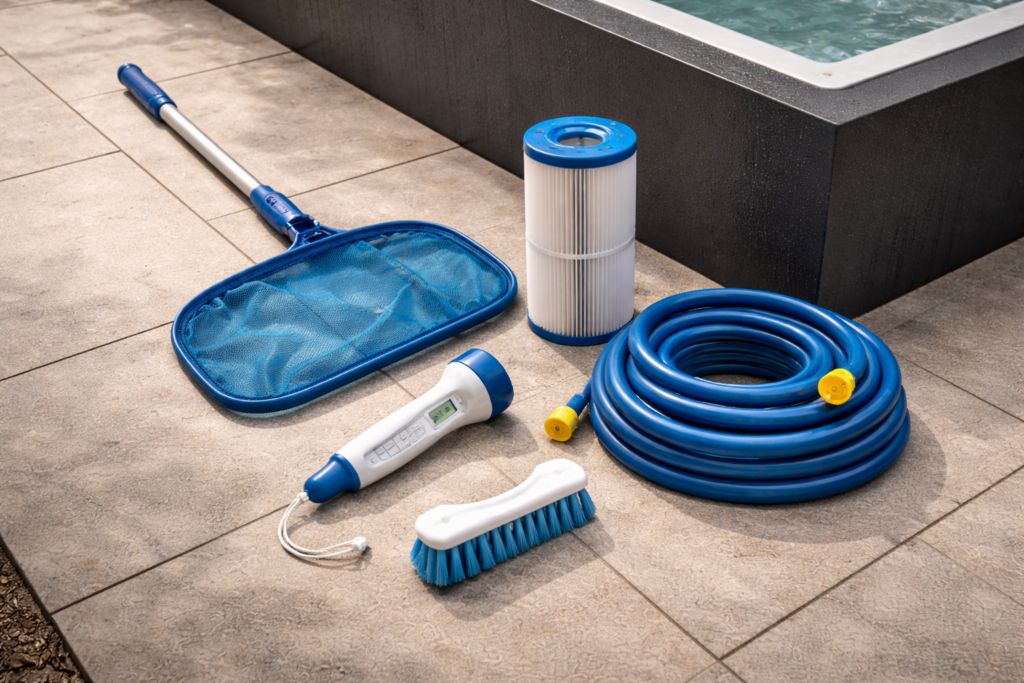
A simple pool skimmer or fine mesh net works well.
Check temperature and clarity
Water should remain:
- Clear
- Odor-free
- Consistently cold
Cloudiness is an early warning sign — not something to ignore.
Wipe contact surfaces
Quickly wipe:
- Tub walls
- Entry steps
- Handholds
Use mild soap or a vinegar-and-water solution.
Filtration and Water Circulation
Filtration is the backbone of cold plunge cleanliness.
Cartridge or inline filters
Most modern cold plunge tubs use:
- Cartridge filters
- Inline sediment filters
These should be:
- Rinsed weekly
- Replaced every 1–3 months, depending on use
Accessory note:
Replacement filters are one of the most common repeat purchases for cold plunge owners.
Water Sanitation: What Actually Works
Cold water slows bacteria but does not sterilize it. Some form of sanitation is still needed.
Ozone systems (most popular)
Ozone:
- Reduces bacteria
- Minimizes chemical use
- Works automatically when integrated
Ozone sanitation systems are common in premium tubs and aftermarket add-ons.
Low-dose sanitizers
Some owners use:
- Hydrogen peroxide
- Mild spa-safe sanitizers
Avoid heavy chlorine routines unless required by your manufacturer.
Always follow tub-specific guidance.
Monthly and Periodic Maintenance
Partial water changes
Most home users drain and refill every:
- 2–4 weeks (heavy use)
- 4–6 weeks (light use)
Frequent full drains are usually unnecessary with proper filtration.
Deep clean (as needed)
Occasionally:
- Drain tub
- Wipe interior with mild cleaner
- Rinse thoroughly
- Refill and rebalance
Avoid abrasive pads or harsh chemicals.
Chillers, Pumps, and Mechanical Care
If your tub uses an external chiller:
- Keep vents clear
- Ensure proper airflow
- Periodically inspect hoses and fittings
Mechanical failures are rare when airflow and filtration are maintained.
If you’re evaluating equipment, this matters more than brand marketing.
Common Cold Plunge Maintenance Mistakes
- Letting water sit uncovered
- Skipping filtration checks
- Overusing chemicals
- Ignoring early cloudiness
- Using household cleaners not rated for tubs
Most problems compound slowly — which is why routine checks matter.
If something feels off, troubleshooting early prevents bigger issues.
How Maintenance Affects Tub Lifespan
Cold plunge tubs last significantly longer when:
- Water stays clean
- Filtration runs consistently
- Mechanical components stay dry and ventilated
Maintenance protects:
- Pumps
- Chillers
- Seals
- Internal plumbing
Long-term ownership depends more on care than brand alone.
Final Thoughts
Cold plunge maintenance does not need to be complicated or time-consuming. A short weekly routine, proper filtration, and basic sanitation are enough for most home users.
If you’re building a simple system and sticking to it, ownership stays easy — and the plunge stays cold, clean, and reliable.
