Heatandsteam.com may receive commissions on purchases made from the links on this page.
Cold plunge tubs have moved from elite athletic training rooms into home gyms, backyards, and recovery spaces. But while interest is high, the market is fragmented — ranging from $100 stock tanks to $10,000+ self-contained systems.
This guide explains what actually matters when buying a cold plunge tub, which types make sense for home use, and how to avoid paying for features you don’t need.
If you’re new to cold exposure, start with the basics first: Cold Plunge Therapy Explained
What Is a Cold Plunge Tub?
A cold plunge tub is a container designed for full-body cold water immersion, typically between 35°F and 55°F. Unlike ice baths that rely on bags of ice, many modern cold plunge tubs include active water chilling, filtration, and temperature control.
Home options fall into four broad categories, each with different cost, maintenance, and convenience tradeoffs.
Types of Cold Plunge Tubs (And Who Each Is For)
1. Ice Bath & Stock Tank Style Tubs
Best for: Budget setups and beginners
These are simple tubs — often plastic, rubber, or galvanized steel — filled with cold water and ice.
👉 Compare Prices:
- Stock tanks (Amazon / Tractor Supply / Home Depot)
- Large insulated ice molds or ice makers
Pros
- Very low upfront cost
- No electronics or mechanical failure points
- Easy to replace or relocate
Cons
- Requires constant ice
- No temperature precision
- Water hygiene requires frequent draining
2. Insulated Passive Cold Plunge Tubs
Best for: People who plunge frequently but don’t want full systems
These tubs rely on insulation rather than active chilling. Water stays cold longer, especially in cooler climates.
👉 Compare Prices:
- Insulated plunge tubs (Amazon / Home Depot / Wayfair)
- Thermal covers and lids (Amazon)
Pros
- No electrical requirements
- Better temperature retention than stock tanks
- Cleaner, more purpose-built designs
Cons
- Still requires ice
- Temperature drifts over time
3. Cold Plunge Tubs with External Chillers
Best for: Serious home users and athletes
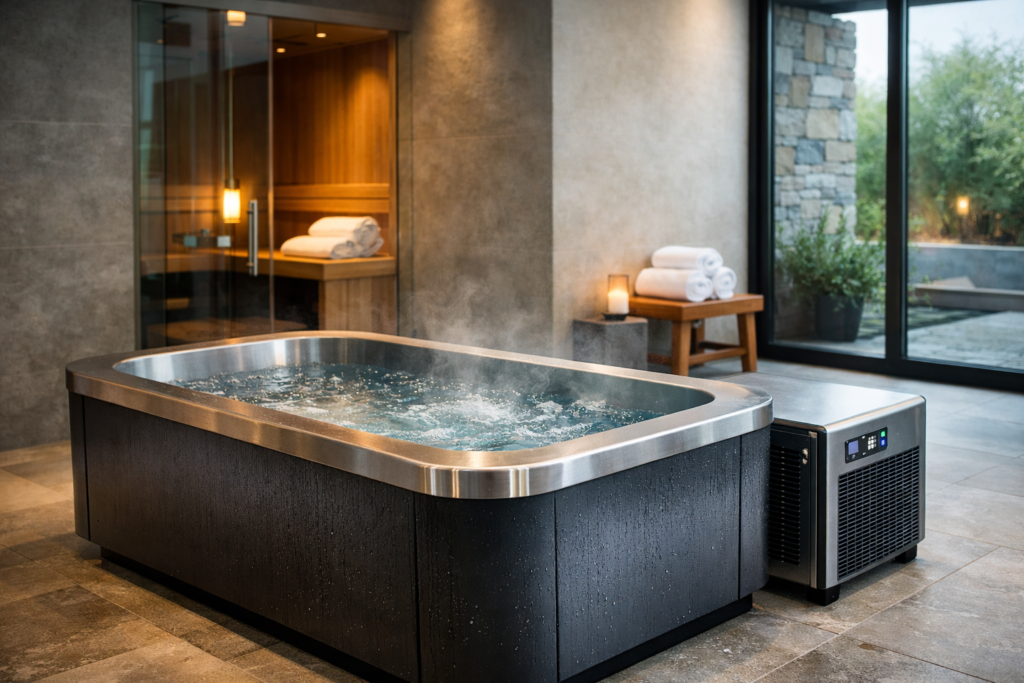
This setup pairs a plunge tub with a separate water chiller, similar to what’s used in aquariums or industrial cooling.
👉 Compare Prices:
- Water chillers (Amazon / Home Depot / Wayfair)
- Hose kits, quick-connect fittings, filtration systems (Amazon / Home Depot)
Pros
- Precise temperature control
- Lower long-term cost than ice
- Modular (replace tub or chiller independently)
Cons
- More complex installation
- Requires space for external equipment
- Plumbing connections must be correct
4. All-in-One Cold Plunge Systems
Best for: Turnkey buyers who want minimal hassle
These are fully integrated systems with built-in chilling, filtration, and controls.
👉 Compare Prices:
- All-in-one Cold Plunge Tub Systems (Amazon / Home Depot / Wayfair)
Pros
- Easiest to use
- Cleanest aesthetic
- Designed for daily use
Cons
- High upfront cost
- Repairs are brand-dependent
- Less modular
Key Features That Actually Matter
Temperature Range
Look for systems that reliably reach 40°F or lower. Anything above that limits adaptation benefits.
Cooling Method
- Ice-based = cheap, labor-intensive
- Compressor-based chillers = expensive, efficient
Filtration & Sanitation
Standing water gets dirty fast.
Minimum expectations:
- Inline filter
- Ozone or UV sanitation (optional but helpful)
- Easy drain access
👉 Check prices:
Insulation
Insulation reduces:
- Ice usage
- Chiller workload
- Energy costs
Double-wall construction or insulated lids matter more than aesthetics.
Size & Ergonomics
Most adults need:
- 35–45 inches of length
- 24–30 inches of depth
If you can’t fully submerge to shoulder level comfortably, you’ll use it less.
Indoor vs Outdoor Cold Plunge Tubs
Indoor setups
- Easier temperature control
- Require drainage planning
- Need moisture management
Outdoor setups
- Save indoor space
- Seasonal temperature swings
- Require weather-rated materials
👉 Compare Prices:
- Outdoor-rated plunge tubs (Amazon / Home Depot / Wayfair)
- Weather covers and enclosures
Maintenance Expectations (Be Honest With Yourself)
Cold plunges are not “set and forget.”
Expect:
- Weekly water checks
- Monthly filter changes (depending on use)
- Periodic full drains
If that sounds annoying, an all-in-one system may be worth the premium.
Common Buying Mistakes
- Buying too small
- Underestimating maintenance
- Assuming ice baths are “temporary” (they rarely stay that way)
- Ignoring electrical requirements for chillers
How Much Should You Spend?
| Budget | What You Get |
|---|---|
| <$300 | Stock tank + ice |
| $500–$1,500 | Insulated tub |
| $2,000–$4,000 | Tub + external chiller |
| $5,000+ | All-in-one system |
Spending more primarily buys convenience, not better cold exposure.
Is a Cold Plunge Worth It at Home?
For people who use it regularly: yes.
For people who “want to try it”: start cheap.
Cold exposure rewards consistency, not luxury.
Final Thoughts
A cold plunge tub is one of the most effective recovery tools you can use at home — but only if it fits your space, habits, and tolerance for maintenance.
Start simple, upgrade only when usage justifies it, and prioritize temperature reliability over aesthetics.
Next, you may want to read:
