Heatandsteam.com may receive commissions on purchases made from the links on this page.
Cold plunge tubs have moved well beyond professional training rooms and spas. Today, more homeowners are adding cold plunge setups alongside saunas, steam rooms, or home gyms — not for extremes, but for recovery, contrast therapy, and daily routines.
This guide explains the different types of cold plunge tubs, what actually drives cost, which features matter long-term, and how to choose a setup that fits your space and habits.
If you’re still early in the research process, start with the broader overview first.
What Is a Cold Plunge Tub?
A cold plunge tub is a purpose-built container designed to hold cold water — typically between 40°F and 55°F — for short immersion sessions.
Unlike improvised ice baths, dedicated cold plunge tubs are designed for:
- Repeated use
- Temperature consistency
- Easier cleaning and maintenance
- Integration with chillers or filtration systems
Cold plunge tubs range from very simple setups to fully integrated systems with precise temperature control.
Types of Cold Plunge Tubs
Understanding the major categories is the most important step before shopping.
Purpose-Built Cold Plunge Tubs
These are tubs designed specifically for cold immersion.
Typical features:
- Insulated shells
- Drain ports
- Chiller compatibility
- Optional filtration systems
Best for: Homeowners who want a clean, repeatable setup without DIY modification.
Read More: Types of Cold Plunge Tubs: Barrel, Chest, Inflatable & Built-In
Chest Freezer Conversions
A popular budget option.
Pros:
- Low upfront cost
- Readily available
- Holds cold temperatures well
Cons:
- Requires DIY sealing and safety modifications
- No built-in filtration
- Not designed for human immersion
Best for:
DIY-inclined users willing to maintain water carefully.
⚠️ This option requires research and care to avoid electrical and sanitation issues.
Inflatable or Portable Cold Plunge Tubs
Lightweight and easy to store.
Pros:
- Low cost
- Minimal setup
- Indoor or outdoor flexibility
Cons:
- Limited insulation
- Shorter lifespan
- Ice-dependent unless paired with a chiller
Best for: Beginners testing cold exposure or users with limited space.
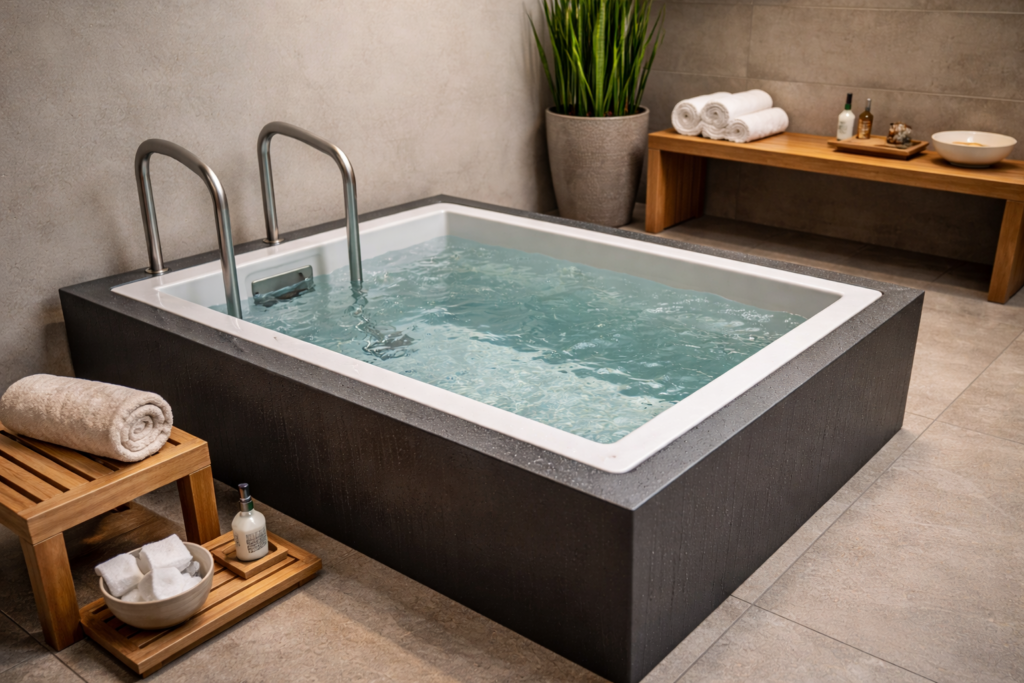
Built-In or Custom Cold Plunge Installations
Permanent installations integrated into a bathroom or wellness space.
Pros:
- Clean aesthetics
- Seamless integration
- Often paired with saunas or steam rooms
Cons:
- Higher cost
- Requires professional installation
- Less flexibility once built
Best for:
High-end remodels or dedicated wellness rooms.
Cold Plunge Cooling Methods
How the water stays cold matters more than most buyers realize.
Ice-Only Systems
The simplest method.
- Requires frequent ice additions
- Temperature fluctuates
- Higher ongoing effort
Works best for:
Occasional use or portable tubs.
Chiller-Based Systems
Uses an electric chiller to maintain temperature automatically.
Benefits:
- Precise temperature control
- Consistent sessions
- Less daily effort
Downsides:
- Higher upfront cost
- Requires electrical service
Most long-term users eventually move to a chiller setup.
Cold Plunge Tub Size & Capacity
Key considerations:
- Body height
- Sitting vs lying immersion
- Water displacement
Common sizes:
- Single-person tubs (most homes)
- Oversized tubs (shared or athletic use)
Bigger tubs:
- Cost more to cool
- Require more water changes
- Need more space
Indoor vs Outdoor Placement
Indoor Cold Plunge Tubs
Pros:
- Climate protection
- Year-round use
- Easier temperature control
Cons:
- Drainage planning required
- Moisture management important
Outdoor Cold Plunge Tubs
Pros:
- Easier drainage
- Pairs well with outdoor saunas
- Seasonal cooling advantages
Cons:
- Weather exposure
- Insulation becomes critical
What Does a Cold Plunge Tub Cost?
Prices vary widely based on design and features.
Entry-Level ($100–$500)
- Inflatable tubs
- DIY chest freezer setups
Mid-Range ($1,000–$3,000)
- Purpose-built tubs without chillers
- Portable systems
Premium ($4,000–$8,000+)
- Integrated chillers
- Filtration systems
- High-end materials
Cost is driven more by cooling method and build quality than brand name.
Maintenance & Water Care Expectations
Cold plunge tubs require routine care.
Expect:
- Regular water changes
- Basic cleaning
- Occasional sanitation treatment
Helpful tools (easy affiliate links):
- Water test strips
- Sanitizers
- Floating thermometers
- Insulated covers
Cold Plunge vs Ice Bath
Many buyers start by comparing these two options.
Key differences:
- Ice baths are improvised
- Cold plunge tubs are designed systems
- Long-term cost and effort differ significantly
If you’re weighing both, see the full comparison.
Is a Cold Plunge Tub Worth It for Home Use?
A cold plunge tub makes sense if:
- You value consistency
- You plan regular use
- You want minimal daily setup
It may not be ideal if:
- You prefer occasional ice baths
- Space is extremely limited
- Maintenance feels burdensome
The best setup is one you’ll actually use.
Final Thoughts
Cold plunge tubs range from simple and inexpensive to fully integrated wellness systems. The right choice depends less on trendiness and more on how often you plan to use it, where it will live, and how much effort you want to invest long-term.
For most homeowners, starting with a well-designed tub — and upgrading cooling later — is a practical approach.
Next, explore:
