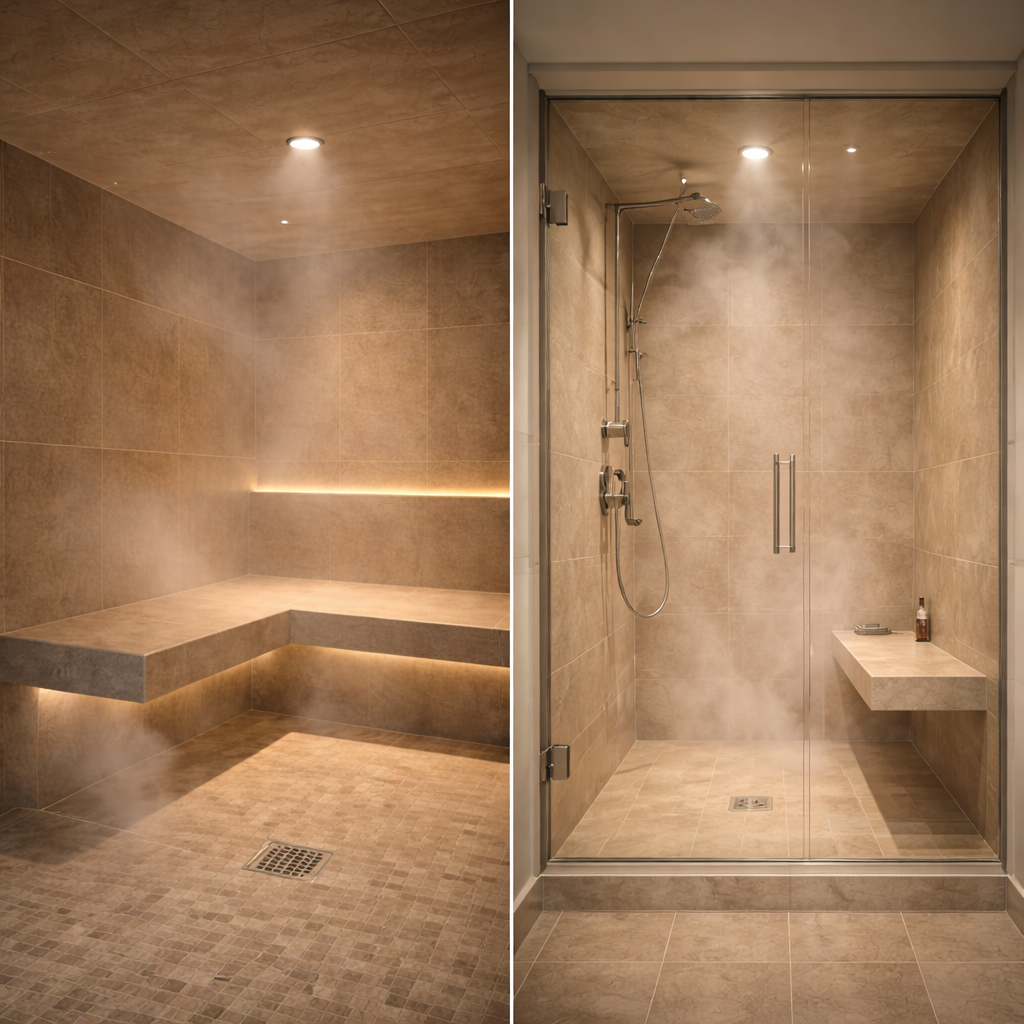
People often use the terms steam room and steam shower interchangeably, but they’re not the same thing. While both use steam to create a hot, humid environment, the differences matter when it comes to cost, installation, comfort, and long-term use.
This guide explains the practical differences between steam rooms and steam showers, when each makes sense, and how to choose the right option for your home.
What Is a Steam Room?
A steam room is a dedicated enclosed space designed specifically for steam bathing. It is built to retain heat and moisture for longer sessions and is usually separate from a standard shower.
Typical characteristics include:
- Built-in seating or benches
- Fully waterproofed walls, ceiling, and floor
- Sloped ceiling to manage condensation
- Dedicated steam generator
- Designed for sitting, not standing
Steam rooms are intended for relaxation sessions, not quick hygiene use.
For a full overview, see dedicated enclosed space.
What Is a Steam Shower?
A steam shower is a standard shower enclosure that has been upgraded with a steam generator. It functions as both a regular shower and a steam environment.
Typical characteristics include:
- Standing room rather than bench seating
- Glass shower enclosure with sealed door
- Steam generator tied into the shower
- Shorter steam sessions
- Dual-purpose use (showering + steam)
Steam showers are popular where space is limited or where homeowners want steam without dedicating a separate room.
Key Differences at a Glance
Purpose and Use
Steam Room
- Built for relaxation
- Longer sessions
- Seated use
- Spa-like experience
Steam Shower
- Built for convenience
- Shorter sessions
- Standing use
- Combines daily showering with steam
Seating and Comfort
Steam rooms almost always include built-in benches, often tiled or contoured for comfort.
Steam showers typically:
- Do not include seating
- May include a small fold-down seat
- Are less comfortable for long sessions
If seating matters to you, see built-in benches.
Size and Space Requirements
Steam rooms:
- Require more square footage
- Can be custom-shaped
- Are often part of a larger bathroom or wellness area
Steam showers:
- Fit into standard shower footprints
- Work well in existing bathrooms
- Are easier to retrofit
Cost Differences
Steam rooms generally cost more because they involve:
- Dedicated construction
- More waterproofing
- Built-in seating
- Larger generators
Steam showers are usually less expensive because they reuse existing space and plumbing.
For realistic pricing, see realistic pricing.
Installation Complexity
Steam rooms require:
- Full vapor-proof construction
- Sloped ceilings
- Drainage planning
- Larger electrical capacity
Steam showers:
- Still require proper waterproofing
- Are simpler to integrate into existing bathrooms
- Often use smaller generators
For planning details, see installation complexity.
Steam Quality and Experience
Steam rooms:
- Hold steam longer
- Provide more even heat
- Feel more immersive
Steam showers:
- Heat up faster
- Lose steam more quickly
- Are best for shorter sessions
This difference is especially noticeable during longer relaxation use.
Which One Is Right for You?
Choose a Steam Room If:
- You want long, seated steam sessions
- Comfort and relaxation are priorities
- You’re building or remodeling
- You want a spa-like experience at home
Choose a Steam Shower If:
- Space is limited
- You want dual-purpose functionality
- You plan to steam for shorter periods
- Budget is a concern
Both options use similar steam generators, but sizing and expectations differ.
See steam generators.
Maintenance Differences
Steam rooms:
- Require more surface cleaning
- Benefit from regular ventilation
- Have more grout and tile area
Steam showers:
- Accumulate soap scum
- Need more frequent cleaning
- Are used more often
For a simple routine, see Steam Room Maintenance Checklist
Can You Upgrade One Into the Other?
In some cases, yes — but it’s not simple.
Converting a steam shower into a steam room often requires:
- Adding seating
- Rebuilding walls or ceiling
- Increasing generator capacity
It’s usually easier to decide before installation than to retrofit later.
Final Thoughts
Steam rooms and steam showers serve different needs. A steam room is about comfort and relaxation, while a steam shower prioritizes convenience and space efficiency.
Neither is “better” in every situation — the right choice depends on how you plan to use steam in your daily life.
If you’re still deciding, start with the full overview: Steam Room Buying Guide.
