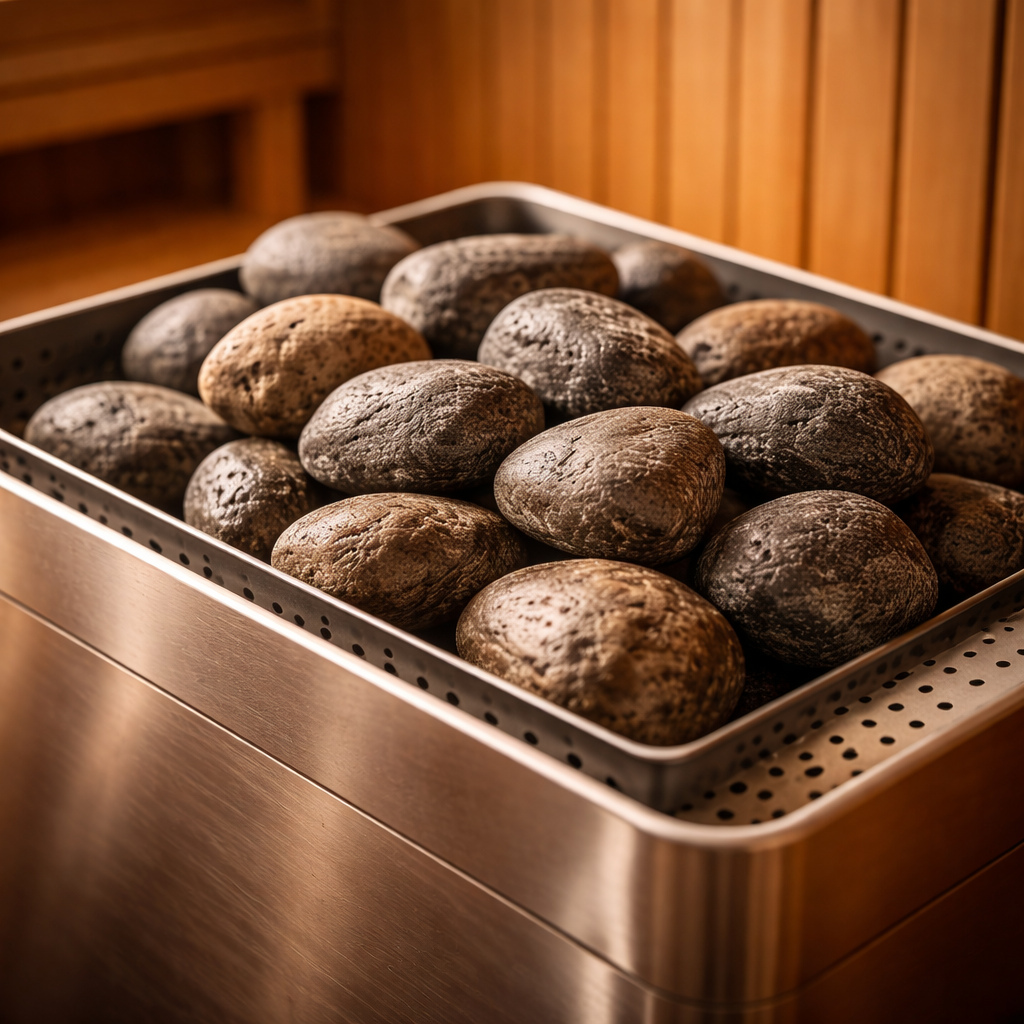
Sauna stones are easy to forget about — until your sauna stops heating evenly or just doesn’t feel the same. While they’re built to withstand repeated heating and cooling, sauna stones do not last forever.
This guide explains how often sauna stones typically need to be replaced, what signs to watch for, and how stone condition affects heat quality and heater performance.
Heatandsteam.com may receive commissions on purchases made from the links on this page.
Short Answer: Sauna Stones Last Years — But Not Indefinitely
Most sauna stones last several years under normal home use. However, lifespan varies based on:
- Frequency of use
- Heat levels
- Whether water is poured on the stones
- Stone quality and stacking
Eventually, stones crack, crumble, and restrict airflow, which affects both comfort and heater efficiency.
Why Sauna Stones Wear Out Over Time
Sauna stones are exposed to repeated cycles of:
- Extreme heat
- Rapid cooling
- Moisture (in traditional saunas)
Over time, this causes stones to:
- Crack internally
- Break into smaller pieces
- Shed dust and debris
As stones degrade, airflow through the heater becomes restricted, making it harder for heat to circulate properly.
Signs It’s Time to Replace Sauna Stones
You don’t need to replace stones on a schedule — you replace them when they show signs of wear.
Common signs include:
- Stones are visibly cracked or crumbling
- Excessive stone dust collects inside the heater
- Sauna takes longer to heat up
- Heat feels uneven or harsh
- Steam output is weaker when water is poured on stones
If you notice one or more of these issues, it’s usually time to replace the stones.
How Often Most Home Sauna Owners Replace Stones
For typical home use:
- Light use (1–2 sessions per week):
Stones may last 4–6 years or longer - Moderate use (3–5 sessions per week):
Stones often last 2–4 years - Heavy use (daily or high-heat sessions):
Stones may need replacement every 1–2 years
Usage habits matter more than calendar time.
Does This Apply to Infrared Saunas?
Infrared saunas generally do not use sauna stones. Stones are primarily found in traditional electric saunas that heat air and generate steam.
If you’re unsure which type you own, this overview helps clarify the difference.
How Many Sauna Stones Do You Need?
The number of stones depends on your heater size and manufacturer specifications.
Most electric heaters require:
- 40–100 pounds of stones, depending on wattage and design
Check your heater’s manual before buying. Purchasing the correct quantity ensures proper airflow and prevents overheating.
Many owners choose to buy replacement sauna stones designed for electric heaters rather than reusing worn stones.
How to Replace Sauna Stones (Overview)
Replacing sauna stones is straightforward:
- Turn off and unplug the heater
- Allow the heater to cool completely
- Remove old stones and debris
- Clean the heater’s stone compartment
- Stack new stones loosely to allow airflow
Avoid packing stones tightly — airflow is critical for efficient heating.
If you want more detail on heater care, stone replacement fits into routine sauna maintenance.
Can You Reuse Old Sauna Stones?
In most cases, it’s better not to reuse cracked or crumbling stones.
While intact stones may still function, mixing old and new stones can:
- Reduce airflow
- Create uneven heating
- Shorten the life of new stones
For best results, replace stones as a full set when degradation is noticeable.
Why Stone Replacement Affects Sauna Longevity
Worn stones don’t just affect comfort — they affect the heater itself. Poor airflow can cause heaters to work harder, increasing wear over time.
Regular stone replacement helps:
- Maintain consistent heat
- Protect heater components
- Extend the overall life of the sauna
Stone care is one small part of owning a sauna long-term.
Final Thoughts
Sauna stones are a consumable part of traditional sauna ownership. While they last years, replacing them when needed keeps your sauna heating efficiently and comfortably.
Pay attention to stone condition, replace them when signs appear, and your sauna will continue to perform as intended.
